

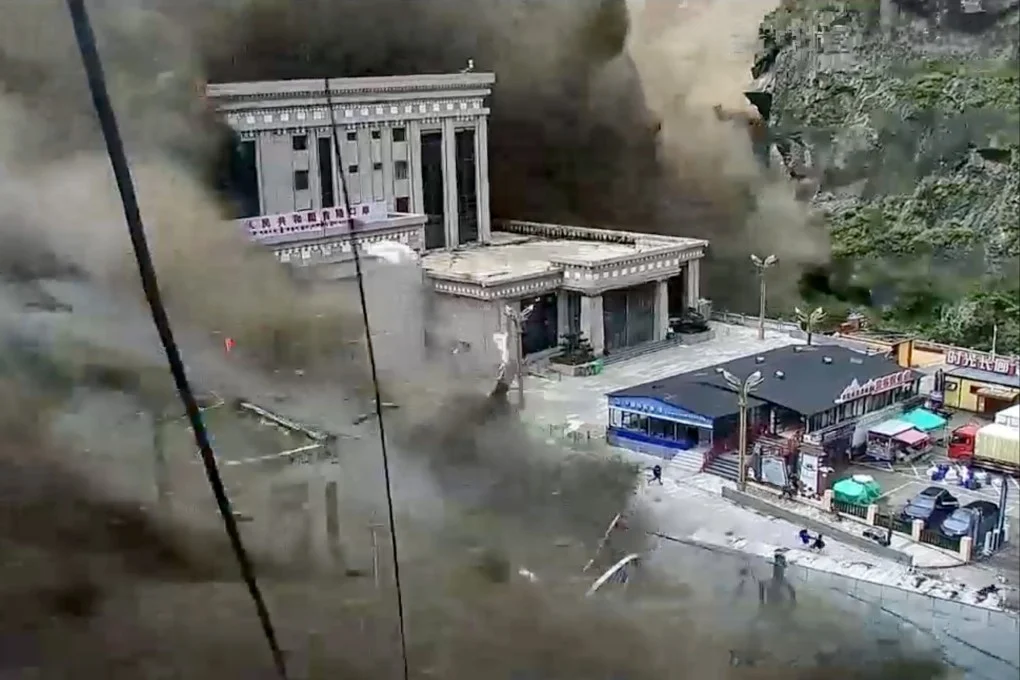
Xizang: Rescue operations are underway after catastrophic flash floods and mudslides struck mountainous areas along the China-Nepal border, but unstable slopes, blocked roads, changing water levels and the threat of further rain are making the search for more than 1,300 missing people extremely difficult.
A mudslide hit Gyirong Port in southwest China’s Xizang Autonomous Region on Wednesday, triggering a major emergency response at the strategically important China-Nepal trade gateway.
Chen Hongqi, a senior engineer at China’s Ministry of Natural Resources, said the region’s steep terrain and rapidly changing water conditions were creating serious risks for rescuers. He warned that unstable slopes, changing upstream water levels and additional rainfall could trigger secondary disasters.
Narrow mountain roads are also at risk of collapse, landslides and rockfalls, potentially cutting off rescue teams from affected communities.
More Than 1,300 Missing
Authorities have reported at least 1,384 people missing on both sides of the border, including hundreds of foreign nationals.
Nepalese authorities said 826 people were missing in the country, including 517 foreigners. On the Chinese side, officials reported another 558 missing, including 260 foreign nationals.
More than 270 people have been confirmed dead as rescue teams continue searching through areas devastated by torrents of water, mud and debris.
The floods swept through mountain valleys, destroying bridges, damaging roads and inundating communities. The destruction has left rescuers struggling to reach some of the worst-hit areas.
Glacial Collapse Behind Disaster
The US Geological Survey said a glacial collapse triggered the flash flooding in Nepal’s Rasuwa district.
A huge section of ice reportedly broke away and plunged into the valley, sending water and sediment downstream. The impact was intensified by heavy monsoon rainfall that had already saturated the region.
The USGS said there was no earthquake associated with the event.
Rescue Teams Face Extreme Conditions
China has deployed emergency responders to the core disaster zone near the border. The first batch of 141 rescuers arrived with a high-altitude Mi-171 helicopter.
However, mud and debris have blocked major access routes, while unstable slopes and the possibility of falling rocks are creating additional dangers for emergency crews.
In Nepal, rescue helicopters have also struggled to reach some affected locations because of high floodwaters and difficult weather conditions.
India and the European Union have announced plans to provide humanitarian assistance.
Further Rain Raises New Fears
Authorities remain concerned that the disaster could trigger further emergencies.
Additional rainfall expected in the coming days could cause new landslides, mudslides and flash floods. Debris and collapsed earth may also form unstable natural dams, creating the possibility of sudden downstream flooding.
With hundreds still missing, damaged infrastructure and dangerous mountain conditions are turning the rescue operation into a race against time.

