

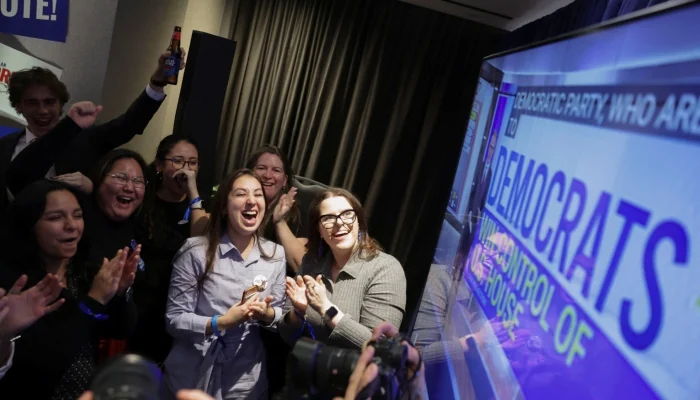
WASHINGTON (Reuters) — Democrats have seized control of both chambers of the US Congress in a sweeping midterm victory, delivering a major political setback to President Donald Trump and signalling growing public frustration with his leadership.
The party made significant gains across traditionally Republican strongholds, flipping six Senate seats and securing a path to a House majority after defeating several high-profile Republican candidates.
Democratic victories in Texas, Ohio, South Carolina, Iowa and Kansas highlighted the scale of the political shift, with voters turning against Republicans over rising living costs, economic concerns and Trump’s decision to launch a war against Iran.
In a historic upset, Democrat Adam Hamilton won a Senate seat in Kansas, marking the party’s first Senate victory in the state since the Great Depression.
In Texas, Democratic state Representative James Talarico defeated Republican Attorney General Ken Paxton, while former senator Sherrod Brown reclaimed a Senate seat in Ohio.
Democrats also scored a major victory in South Carolina, where pediatrician Annie Andrews defeated Republican Senator Darline Graham.
The party’s gains extended beyond Congress, with Democrat Gina Hinojosa defeating Texas Governor Greg Abbott. Democrats also secured governorships in Iowa and Ohio.
Trump, who campaigned extensively for Republican candidates, dismissed the scale of the defeat, claiming on social media that Republicans would have won by a landslide had he been on the ballot.
Despite the crushing results, a White House official described the mood surrounding the president as “defiant”, adding that Trump would continue resisting what the administration calls the “radical left”, regardless of the election outcome.
Democratic Senator Jon Ossoff, who secured re-election in Georgia, described the results as a decisive rejection of Trump’s leadership.
Exit polls indicated widespread dissatisfaction with the country’s direction, with three-quarters of voters saying they were angry or dissatisfied. Around 70 per cent said they wanted Congress to exercise stronger checks and balances on the president.
The results mark a major shift in Washington’s political balance, giving Democrats control of Congress and setting the stage for an intense confrontation with the Trump administration over its domestic and foreign policies.

