

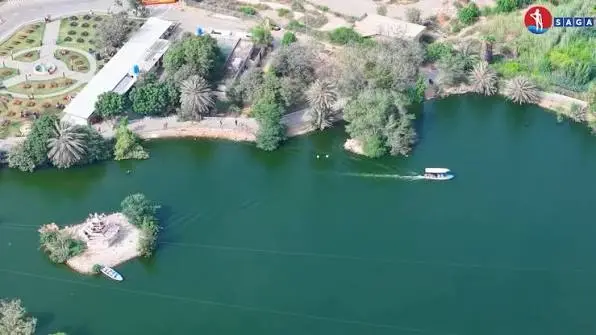
Karachi is Pakistan’s largest commercial city, known for traffic, crowded roads, markets, high-rises and constant activity. A lake is probably the last thing many people would associate with it.
Yet inside Safari Park on University Road lies Swan Lake, a decades-old urban wetland that has become a habitat for waterbirds.
The lake is unusual because it is not a natural river or mountain lake. It emerged in the 1970s after excavation work for raw material left a deep depression where freshwater accumulated. Over time, the site developed into an urban wetland. A research study recorded it at about 3 acres, with a maximum depth of around 25 feet.
Its importance goes beyond scenery. Pelicans, herons, ducks and swans have been recorded there, while research documented 32 bird species in Safari Park’s wider wild environment. Some migratory waterbirds also arrive during winter, with some staying from October or November until March.
The lake has also become a recreational attraction. A small island sits at its centre, with a pagoda-style sitting area surrounded by trees and greenery.
In 2019, Kashmir Point was developed beside the lake. An artificial elevated hill was built with a waterfall cascading down it, inspired by the appearance of Kashmir’s famous Dal Lake. Boating was also introduced.
So, amid Karachi’s concrete, commerce and congestion, there is a place with open water, greenery, an island, boats, a waterfall and visiting birds.
Swan Lake is a reminder that urban nature can emerge in unexpected places. What began as a man-made excavation gradually became an ecosystem of its own, creating a quiet natural world inside Pakistan’s biggest city.


