

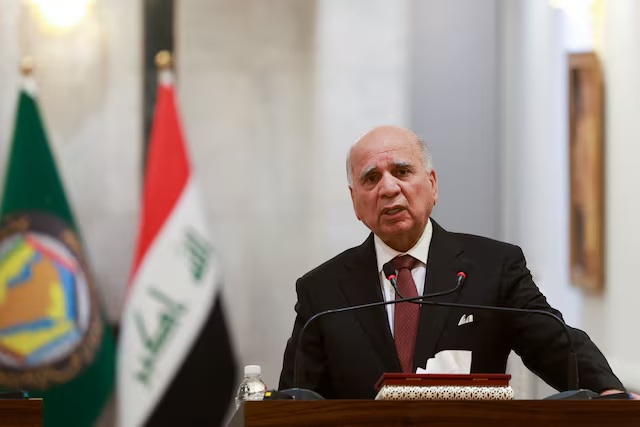

LAHORE MIRROR — The United States has asked Iraq to close nearly all of its border crossings with Iran, allowing only two to remain operational, as Washington increases economic pressure on Tehran, Iraqi Foreign Minister Fuad Hussein has said.
Speaking in an interview with Al Jazeera, Hussein said the US request forms part of Washington’s broader effort to tighten economic restrictions on Iran.
According to Hussein, Iraq faces major practical and economic challenges in meeting the American demand because the two countries share numerous official and unofficial border crossings.
“There are many official and unofficial border crossings with Iran, and closing all of them would be difficult and would affect our economy,” Hussein said.
He added that Washington continues to press Baghdad to shut down the crossings, while Iraqi and US officials remain engaged in discussions over the issue. One of the two crossings expected to remain open is located in Iraq’s Kurdistan region.
The pressure comes as Iraq has already taken steps to strengthen controls along its border with Iran. Last month, Iraqi authorities closed the busy Sheeb border crossing to conduct a security review and install detection equipment aimed at preventing smuggling.
The border issue has become increasingly important as Iraq attempts to balance its close economic relationship with neighboring Iran against growing pressure from Washington.
Hussein also revealed that Iraq has reached understandings with the United States regarding its oil exports through the Strait of Hormuz. Under the arrangement, Iraqi oil shipments would be allowed to pass through a shipping lane near Oman.
The Strait of Hormuz remains one of the world’s most strategically important energy routes, and disruptions linked to the ongoing Iran war have created serious concerns for oil-exporting countries across the region.
According to the Iraqi foreign minister, the economic consequences for Baghdad have already been severe. Iraq’s losses from the Iran war and disruptions to its oil exports have reached an estimated $60 billion, he told Al Jazeera.
The comments underline Iraq’s difficult position as tensions surrounding Iran continue to affect regional trade, border activity and global energy supplies. Baghdad must protect its economic interests while navigating pressure from Washington and maintaining relations with its powerful eastern neighbour.
With negotiations continuing over the border crossings and oil-export arrangements, Iraq faces growing uncertainty over how the conflict and US economic pressure on Tehran could further affect its economy.

