

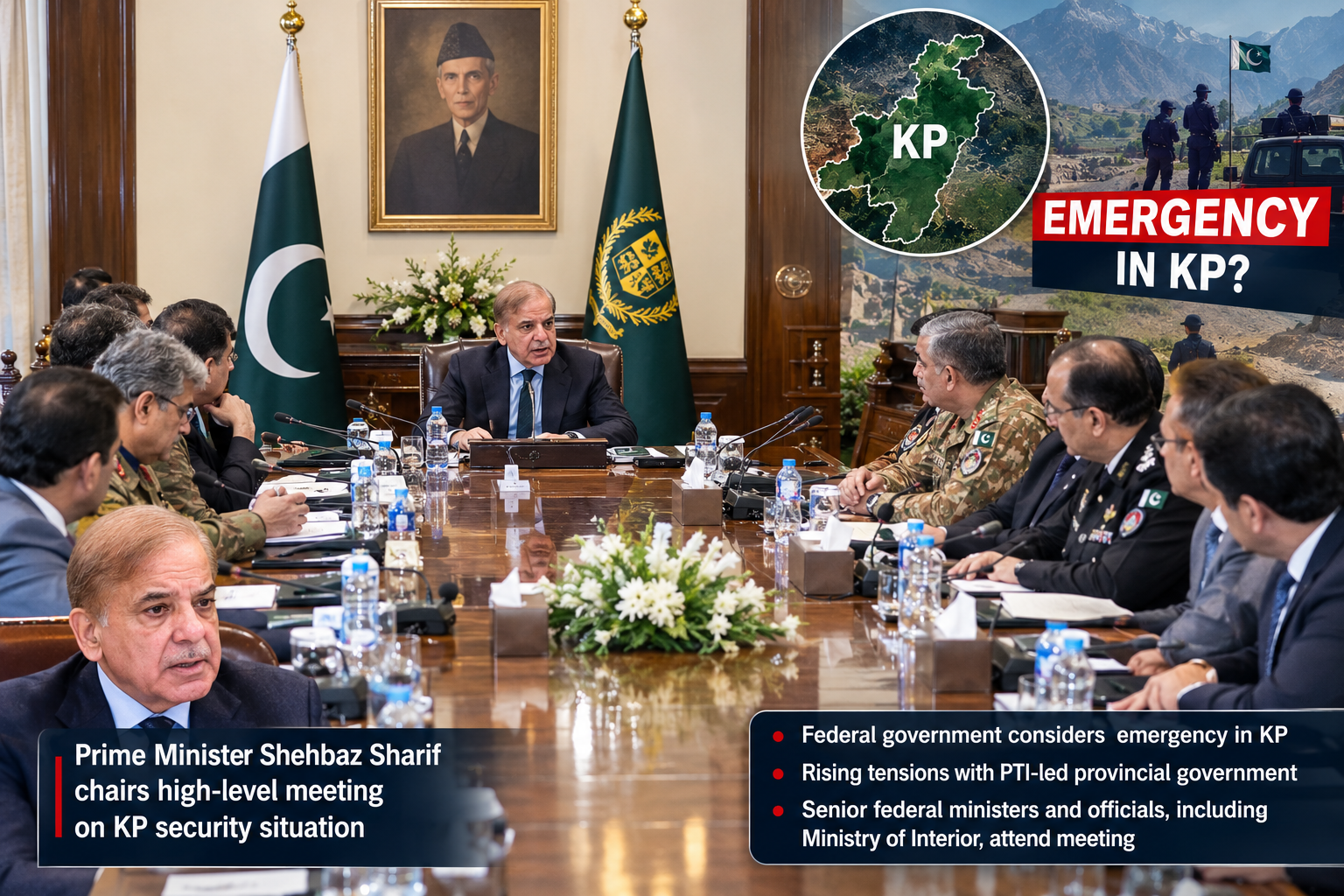
Islamabad : Prime Minister Shehbaz Sharif has called a high-level meeting on Khyber Pakhtunkhwa’s security situation, with the federal government expected to consider imposing an emergency across the province amid rising tensions with the Pakistan Tehreek-e-Insaf (PTI)-led provincial government.
According to media reports citing government sources, the meeting will take place at the Prime Minister’s House in Islamabad and include senior federal ministers and officials from the Ministry of Interior.
Security officials are expected to brief participants on the situation in the province and possible measures to address militancy.
Reports have also emerged that President Asif Ali Zardari, Prime Minister Shehbaz Sharif and senior military officials are expected to hold the meeting, where consultations could lead to a decision on the situation in Khyber Pakhtunkhwa.
The meeting is also expected to review reports from national security institutions and examine the province’s security situation, administrative challenges and possible constitutional measures the federal government could take.
The federal government is also considering whether to impose an emergency or introduce governor’s rule in Khyber Pakhtunkhwa. Sources said a decision could follow consultations involving senior government and security officials. Federal cabinet members have reportedly been asked to remain in Islamabad as the government prepares for a possible cabinet meeting.
Federal Minister Tariq Fazal Chaudhry said on Friday that discussions on the emergency proposal had been completed. Speaking to Geo News, he said the proposal under consideration covered the entire province rather than only the 12 districts previously identified as affected by terrorism.
However, a final decision and the precise legal framework for any intervention had not been officially announced in the reports available.
Security Dispute Between Centre and Province
The debate over emergency measures comes amid disagreements between the federal government and the PTI-led provincial administration over how to tackle militancy.
Prime Minister’s adviser Rana Sanaullah said negotiations with the provincial government remained possible, but stressed that cooperation against terrorism was essential. He said the government had previously explored dialogue and offered further negotiations, but those efforts had not produced an agreement.
Sanaullah also defended intelligence-based operations against militants, rejecting suggestions that the proposed emergency would necessarily require residents to leave affected districts. He said security forces could clear areas, but civilian authorities would need to maintain control and restore normal administration afterward.
He argued that federal intervention could provide additional powers to address security and governance challenges in areas where police and other civilian institutions were unable to operate effectively.
Chief Minister Sohail Afridi, meanwhile, has criticized the federal government and accused it of seeking to weaken the PTI. He has also opposed military operations that could lead to further displacement, highlighting the political divide over the province’s security strategy.
Constitutional Options Under Consideration
Reports have also suggested that the government is examining constitutional provisions, including Articles 232 to 234, which deal with emergency powers and related arrangements. The exact provisions that could be invoked would depend on the nature and legal basis of any proposed intervention.
Some earlier reports indicated that the government was considering measures focused on 12 terrorism-affected districts, including areas in the former tribal belt. Subsequent statements by Chaudhry, however, suggested that a province-wide emergency was being discussed.
The possible move comes as political tensions continue to rise, with PTI leaders and supporters organizing a march towards Islamabad. Government representatives have argued that the provincial administration should priorities counterterrorism efforts, while PTI leaders have accused the federal government of political pressure.
Whether the government proceeds with an emergency, governor’s rule or another security arrangement will depend on consultations and any formal decisions announced by the federal authorities.

