

Pakistan’s political fight has become a familiar script: one party comes to power, the other takes to the streets; the government calls it destabilisation, the opposition calls it resistance. Then the roles change — but the script remains.
The names change. The slogans change. The containers on the roads do not.
Today, the Pakistan Tehreek-i-Insaf is confronting the government. Yesterday, different political parties faced similar confrontations. Tomorrow, another government may find itself on the receiving end of the same politics. This is not simply a PTI-versus-PML-N story. It is a story about a political culture that Pakistan has carried for far too long.
And ordinary Pakistanis are paying for it.
A country already struggling with inflation, shrinking purchasing power, unemployment and weak business activity can ill afford repeated political shutdowns. For a daily-wage worker, a blocked road is not a political statement — it can mean a lost day’s income. For a small shopkeeper, a protest can mean a day without customers. For transporters, manufacturers and traders, uncertainty itself has a price.
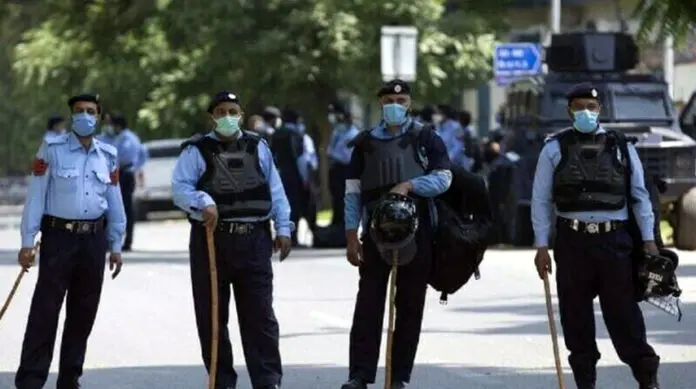
Then comes the bill for the state: containers, police deployments, accommodation, food, transport and other security arrangements. Money that could otherwise support public services is spent managing political confrontation.
This is where politics needs to grow beyond the politics of winning and losing.
The government has a legitimate responsibility to maintain law and order. The opposition has a legitimate right to protest and demand accountability. Neither responsibility should cancel out the other.
But when every disagreement becomes a street battle, every protest becomes a security operation and every negotiation becomes a test of political strength, democracy itself becomes expensive.
Pakistan does not need its political parties to agree. Democracies are built on disagreement. What they need is a mechanism to disagree without bringing the economy to a halt.
Elections, judicial inquiries, political prisoners, constitutional questions and allegations of political victimisation are serious matters. They deserve institutions, evidence, courts, parliament and dialogue — not endless cycles of confrontation.
The country has seen this movie before. Governments change. Opposition parties change. The language of politics changes. Yet the pattern survives.
Perhaps the most important political question today is not who will defeat whom.
It is how long can Pakistan afford to let its politics defeat its own people?
The poor cannot eat political slogans. Small businesses cannot pay their bills with political victories. And an economy struggling for stability cannot keep absorbing the cost of political warfare.
Pakistan does not need less democracy. It needs less political destruction in the name of democracy.
By Faisal Waqas
Faisal Waqas is an MPhil in Mass Communication, a senior journalist and digital media specialist, with more than 14 years of experience covering current affairs, governance and social issues. His writing focuses on public interest, accountability and the everyday realities of Pakistanis. He is also a visiting faculty member at the University of the Punjab.

