

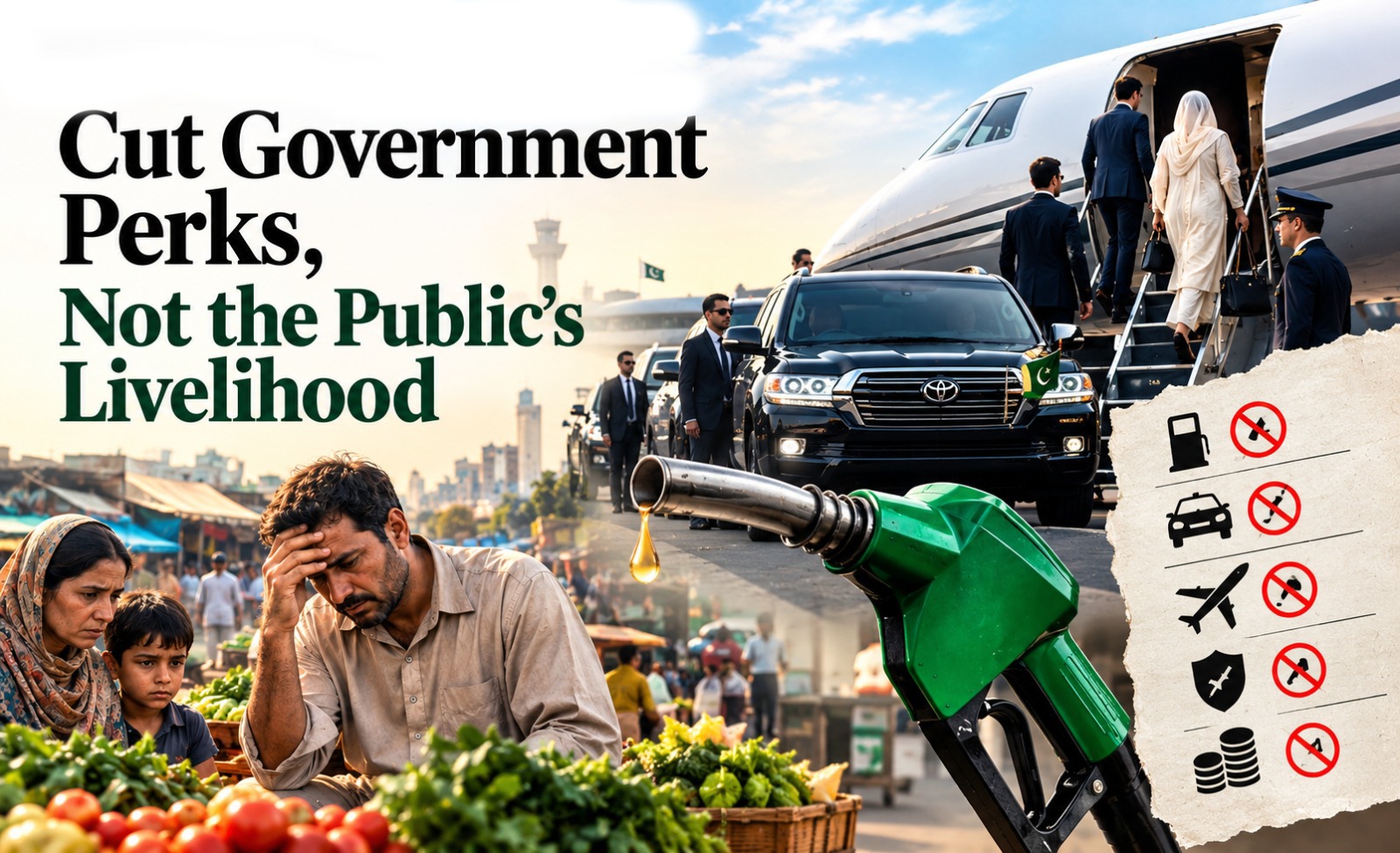
Fuel prices continue to rise in Pakistan. As a result, transport costs, grocery bills and business expenses are putting more pressure on ordinary families.
The government can provide immediate relief in one area: cut unnecessary fuel, travel and other perks for public officials.
Ministers, chief ministers, prime ministers, legislators, judges, senior bureaucrats and other officials often receive government vehicles, fuel and travel facilities. Therefore, the state should set strict limits on these benefits. Officials should also pay for clearly private journeys and expenses.
The recent controversy over Punjab Chief Minister Maryam Nawaz’s use of an official aircraft for a London visit has again raised questions about public spending. The Punjab government said the chief minister would bear the cost. However, questions were later raised about the reported payment and its documentation.
This issue goes beyond one official or one trip. It is about how public money is managed.
If a journey serves a private purpose, taxpayers should not carry the cost. The same rule should apply to federal and provincial governments. Moreover, fuel, vehicles, security protocols and travel facilities should face transparent limits and regular audits.
Security remains important for officials facing genuine threats. At the same time, security spending should remain reasonable and accountable.
Pakistan needs practical austerity, not only speeches about sacrifice. If ordinary citizens must tighten their belts, government institutions should do the same.
Every rupee saved from unnecessary perks can support healthcare, education, transport and public services. It can also reduce pressure on the national and provincial budgets.
Public office is a responsibility. It should not become a gateway to unlimited privileges.
Cut the perks. Reduce the waste. Protect public money. Give ordinary Pakistanis some breathing room.

