

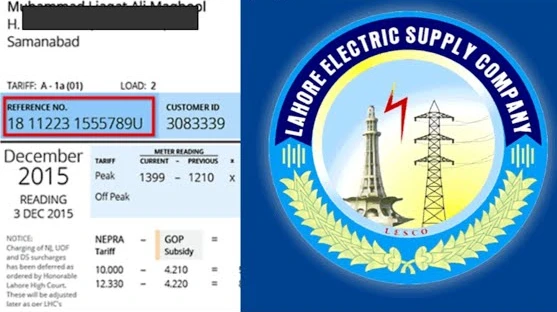
The electricity bill in Lahore is no longer merely a monthly statement of consumption. For an increasing number of consumers, it has become a test of whether the power distribution system can explain, correct and stand behind the figures it puts before them.
The problem is not that electricity bills are sometimes high. Consumption varies, tariffs change and additional charges can significantly affect the final amount. The more serious problem arises when a consumer disputes the recorded consumption and finds that there is no simple, timely and credible mechanism through which the dispute can be resolved.
This is where the billing system begins to fail.
A consumer receives a bill showing an unexpected increase in units. He checks the previous bill and, if possible, the meter. He approaches the relevant office. He is directed from one counter to another, asked to return with documents, or told to wait for an inspection. Meanwhile, the payment deadline approaches.
The result is a familiar dilemma: pay a bill that the consumer believes is incorrect or risk penalties and possible disconnection while pursuing a complaint.
That is not an effective consumer-protection system.
Recent reports concerning Lahore Electric Supply Company’s recovery practices have highlighted precisely this tension. Consumers have complained about pressure to pay disputed bills, while LESCO has maintained that its teams operate within the applicable regulatory framework and that their role includes informing consumers about outstanding payments.
The disagreement points to a larger institutional question.
If a bill is correct, the consumer should be able to see why it is correct. If it is incorrect, there should be a clear mechanism for correcting it.
The burden should not fall entirely on the consumer to prove that a utility’s own records may be wrong.
A bill must be explainable
An electricity bill is ultimately a record of measurable consumption and applicable charges. The utility has access to the information required to explain it: previous meter readings, current readings, consumption history and billing data.
That information should not be treated as inaccessible institutional knowledge.
If consumption suddenly rises by hundreds of units, the first response should be verification, not confrontation.
A consumer asking why his consumption has changed is not refusing to pay. He is asking the institution to explain its calculation.
This distinction matters.
Pakistan has a genuine problem of electricity theft and losses. Distribution companies have a responsibility to recover legitimate dues and take action against illegal connections and theft. But an aggressive recovery regime cannot substitute for accurate billing.
The fight against theft and the protection of legitimate consumers are not competing objectives. They are part of the same objective: a credible electricity distribution system.
Recovery cannot come before verification
The central principle should be simple: verify first, recover second.
Where a bill is disputed, the consumer should be provided with the relevant meter-reading history and a clear explanation of the consumption recorded. Where an inspection is required, it should take place within a defined period. Where an error is identified, the correction should not depend on repeated visits to a utility office.
The existing regulatory framework already recognises the importance of consumer complaints and service standards. The issue, therefore, is not simply the absence of rules.
It is implementation.
A regulation that exists on paper but is difficult for an ordinary consumer to invoke is of limited practical value.
This is particularly important for households that cannot afford to lose a day’s wages travelling to a complaint office, or to pay a disputed amount simply to avoid the consequences of non-payment.
For a large commercial consumer, a billing dispute may be handled by an accountant or legal department. For an ordinary household, it may mean standing in a queue for hours.
The difference is not merely administrative. It is a question of access to justice.
The queue should not be the complaint mechanism
The most visible sign of a failing public service is often not a dramatic breakdown but an inefficient process.
A consumer should not have to make repeated visits to obtain information that the utility already possesses.
He should not have to identify the right official personally.
He should not have to rely on connections or influence to move a routine complaint.
And he should not have to choose between paying a disputed bill and spending several days attempting to have it corrected.
A modern utility should be able to provide a digital complaint trail, a reference number, a responsible officer or department, and a defined resolution time.
The consumer should be able to know whether his complaint has been received, who is examining it and what action has been taken.
Without such transparency, the complaint process becomes dependent on persistence rather than procedure.
That is precisely what a public utility should avoid.
Theft cannot become a substitute for accountability
There is also a danger in allowing the debate to become unnecessarily polarised.
Electricity theft is real. Distribution losses are real. Revenue recovery is necessary. Utilities cannot remain financially viable if legitimate bills are routinely unpaid.
But these facts do not answer a consumer’s complaint about an apparently incorrect bill.
A person accused of theft should be dealt with on evidence and under the law. A consumer disputing his consumption should likewise be dealt with through evidence and an accessible review process.
The same institution must be capable of doing both.
A strong utility is not one that can only recover money. It is one that can also demonstrate why the money is owed.
The real issue is trust
The long-term cost of a dysfunctional billing system is not limited to unpaid bills or administrative inconvenience.
It is the erosion of trust.
When consumers begin to believe that disputing a bill is futile, some will simply pay. Others may delay payment. Still others may seek informal intervention rather than use official channels.
None of these outcomes strengthens the electricity system.
A credible billing system should work on the assumption that most consumers are entitled to an accurate bill and that legitimate recovery can coexist with effective consumer protection.
That requires institutional discipline.
Every disputed bill should generate a traceable record. Every unusual consumption pattern should be capable of explanation. Every complaint should have a reasonable response time. And every decision to disconnect should comply with the applicable regulatory requirements.
The principle is straightforward.
If the utility can demand payment, it must also be able to demonstrate the basis of that demand.
Fix the system, not merely the collection rate
The answer to Lahore’s billing problems is not another recovery campaign alone.
LESCO and the relevant regulatory authorities need to examine the entire consumer-billing chain: meter reading, data entry, billing, abnormal consumption detection, complaint registration, inspection, correction and disconnection.
The objective should be to identify where disputes arise and how quickly they are resolved.
Technology can help. Consumers should be able to access their previous readings and consumption history easily. Automated systems should flag unusually large deviations before bills are issued or, at minimum, trigger a verification process. Complaints should be tracked electronically rather than disappearing into office files.
Most importantly, performance should be measured not only by how much revenue is recovered but also by how many billing complaints are resolved, how long they take to resolve and how many disputed bills are subsequently corrected.
That would provide a much more meaningful measure of institutional performance.
The ordinary consumer is not asking for free electricity.
He is asking for an accurate bill, a fair hearing and a process that does not punish him for questioning an amount he believes is wrong.
That is not an unreasonable demand.
A public utility exercises considerable power over the consumer. With that power comes a corresponding responsibility to explain its actions and correct its mistakes.
The electricity crisis in Lahore is often discussed in terms of generation, tariffs, theft and circular debt. These are important issues.
But there is another crisis that receives less attention: the breakdown of confidence between the utility and the person receiving the bill.
If that relationship is to be repaired, the starting point is simple.
The bill must be right. And when a citizen says it is not, the system must be able to prove otherwise — or correct it.

