

Lahore Mirror: For more than half a century, filmmakers have struggled to recreate the supernatural terror that made William Friedkin’s 1973 classic, The Exorcist, a landmark in horror cinema. Its enduring formula—demonic possession, religious conflict and the desperate battle to save an innocent soul—has inspired countless imitators and sequels. Yet Mike Flanagan’s The Exorcist: Martyrs appears ready to take the franchise into unfamiliar territory.
With its March 12 theatrical release date, the film promises to move beyond the traditional haunted-room setting and into the darker territory of psychological horror, serial murder and religious conspiracy. If the newly released trailer is any indication, Flanagan is not simply revisiting a legendary franchise. He is attempting to reshape its mythology.
From Demonic Possession to a Serial-Killer Mystery
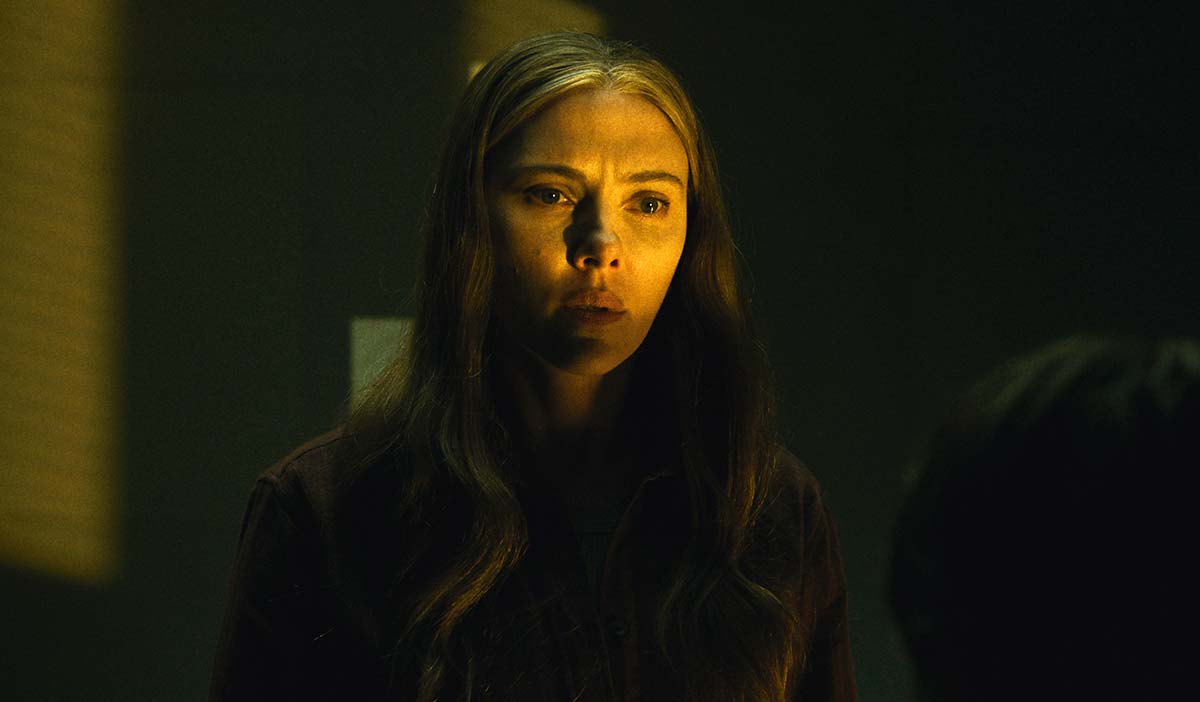
The trailer introduces Scarlett Johansson as Detective Julie Miller, a New York investigator whose past returns to haunt her 13 years after she believed she had brought the reign of terror associated with satanic serial killer Father Sunday, played by John Leguizamo, to an end.
That fragile sense of closure collapses when a copycat begins leaving disturbing messages in sacrificial blood inside a church crypt. What initially appears to be another criminal investigation gradually opens the door to something more sinister, forcing Miller to question whether the evil she thought she had defeated ever truly disappeared.
This shift from exorcism to police investigation gives Martyrs a distinctive narrative direction. Rather than centering the story on a single possessed victim, the film appears to explore how religious fanaticism, violence and supernatural evil might intersect across generations.
The trailer’s suggestion of a spiritual thread connecting notorious killers, from H. H. Holmes to the Zodiac, further expands the film’s ambitions. The idea transforms individual acts of murder into fragments of a much larger and more disturbing mystery. Evil is no longer confined to one house, one victim or one demonic presence. It becomes a pattern that investigators must uncover.
Mike Flanagan’s Signature: Horror With a Human Cost
Mike Flanagan has built his reputation on horror that extends beyond jump scares and supernatural spectacle. From Netflix’s The Haunting of Hill House to Midnight Mass, his work frequently examines grief, guilt, faith and the psychological scars that shape human behaviour.
Those themes appear central to Martyrs as well. The film’s detective-driven narrative provides a framework for exploring the personal consequences of confronting an evil that refuses to remain in the past. Miller’s investigation is not merely a search for a killer; it threatens to reopen wounds that time has failed to heal.
The supporting cast reinforces that character-driven approach. Diane Lane plays Miller’s mother, while Jacobi Jupe portrays her son, bringing family relationships into a story already burdened by violence and religious dread. Their presence suggests that the investigation may carry consequences far beyond the crime scenes.
Chiwetel Ejiofor, appearing as a conflicted former prison chaplain, and Laurence Fishburne, as a respected priest, add further theological and moral dimensions to the story. Their characters could help establish a conflict between institutional faith, personal conviction and the possibility that the forces confronting Miller cannot be explained through conventional reasoning alone.
Visually, the trailer moves between stark crime scenes and decaying Gothic spaces, contrasting the modern machinery of criminal investigation with the ancient fears embedded in religious imagery. This tension between the rational and the supernatural could become one of the film’s defining features.
Can Martyrs Redefine The Exorcist?
The challenge facing any new Exorcist film is formidable. Friedkin’s original combined intimate psychological terror with questions about faith, suffering and the existence of evil. Its influence has proved difficult to escape, even as subsequent instalments have attempted to expand its mythology.
Flanagan’s apparent strategy is to approach those questions from a different direction. By combining crime investigation, serial-killer mythology and religious horror, Martyrs could offer a broader vision of the universe established by the original film.
The approach also carries risks. A mythology that connects historical killers and supernatural forces could become overcomplicated if its mysteries overshadow the human stories at its centre. The film will need more than elaborate lore and an impressive ensemble to deliver the emotional intensity audiences associate with The Exorcist.
Nevertheless, the trailer suggests a filmmaker interested in exploring horror as both a psychological experience and a question of belief. Rather than simply repeating the familiar confrontation between priest and demon, Flanagan appears to be asking whether evil can be tracked, understood or defeated when its origins stretch beyond any single crime.
As the film’s ominous warning puts it, “Darkness must be hunted.” Whether The Exorcist: Martyrs can establish a new identity for one of horror cinema’s most influential franchises remains to be seen. But its apparent blend of investigative suspense, religious dread and deeply personal trauma points towards a different kind of exorcism—one in which the search for evil may be as terrifying as the evil itself.

