

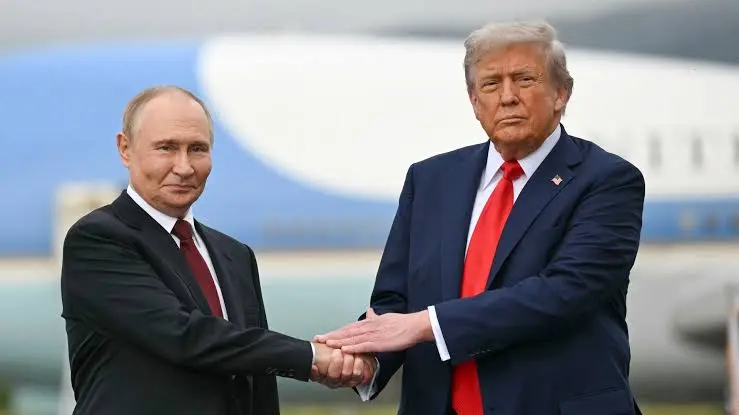
WASHINGTON (Reuters): US President Donald Trump said Russia would immediately supply more than 300,000 metric tons of diesel to the United States and the global market, as his administration seeks to bring down fuel prices ahead of the November 3 midterm elections.
Trump announced the agreement following what he described as a successful discussion with Russian President Vladimir Putin. The move comes as diesel prices in the United States approach record highs, increasing costs for farmers, truckers and businesses that depend on fuel.
In a social media post, Trump said Russia would provide an additional 500,000 tons of diesel in November, followed by another 1 million tons shortly afterward. He added that further supplies would depend on the condition of Russian refineries, some of which have been damaged during the war in Ukraine.
Kirill Dmitriev, an envoy for Putin, also welcomed US-Russian cooperation on diesel and energy following the leaders’ conversation.
Diesel Prices Rise Amid Global Supply Disruptions
The announcement comes amid a global fuel supply crunch triggered by the wars involving Iran and Ukraine. According to the American Automobile Association (AAA), the average US diesel price reached $6.28 per gallon on Thursday.
Diesel prices have risen approximately 70% since the US-Israeli war with Iran began earlier this year, adding to inflationary pressures across the economy. Diesel is essential for transporting goods, operating agricultural machinery and heating homes.
The Trump administration has already taken steps to increase fuel availability, including pressing allies to release emergency reserves and expanding access to tax-exempt, red-dyed diesel normally used in agricultural equipment.
The agreement with Russia marks a significant development in energy relations between Washington and Moscow, particularly as the United States has imposed sanctions on Russian energy companies over Moscow’s invasion of Ukraine, which began in February 2022.
On Friday, the US Treasury Department issued a general license allowing imports of Russian diesel through April 7, 2027.
White House Considers Emergency Measures
Separately, the Trump administration is considering additional measures to control diesel prices and expand domestic fuel production.
Three industry sources told Reuters that Trump could direct senior officials to identify ways to increase fuel output and address regulatory barriers that restrict energy production. The directive could take the form of a presidential memorandum.
The administration is also considering invoking the Cold War-era Defense Production Act, which gives the president powers to support domestic manufacturing through loans, loan guarantees and requirements prioritising government contracts for essential goods.
Officials have been examining how the law could help expand US oil-refining capacity as the war with Iran highlights the country’s vulnerability to supply disruptions.
Refining executives told administration officials last month that federal funding would be more effective if used to improve existing refineries or expand current facilities rather than build entirely new plants, which would take years and cost considerably more.
Trump also predicted that US gasoline prices would soon fall to between $1.85 and $1.95 per gallon. However, AAA put the national average at approximately $4.37 per gallon on Friday.
Lower fuel prices have become a key political priority for the administration as voters prepare to decide control of Congress in the November midterm elections.

