

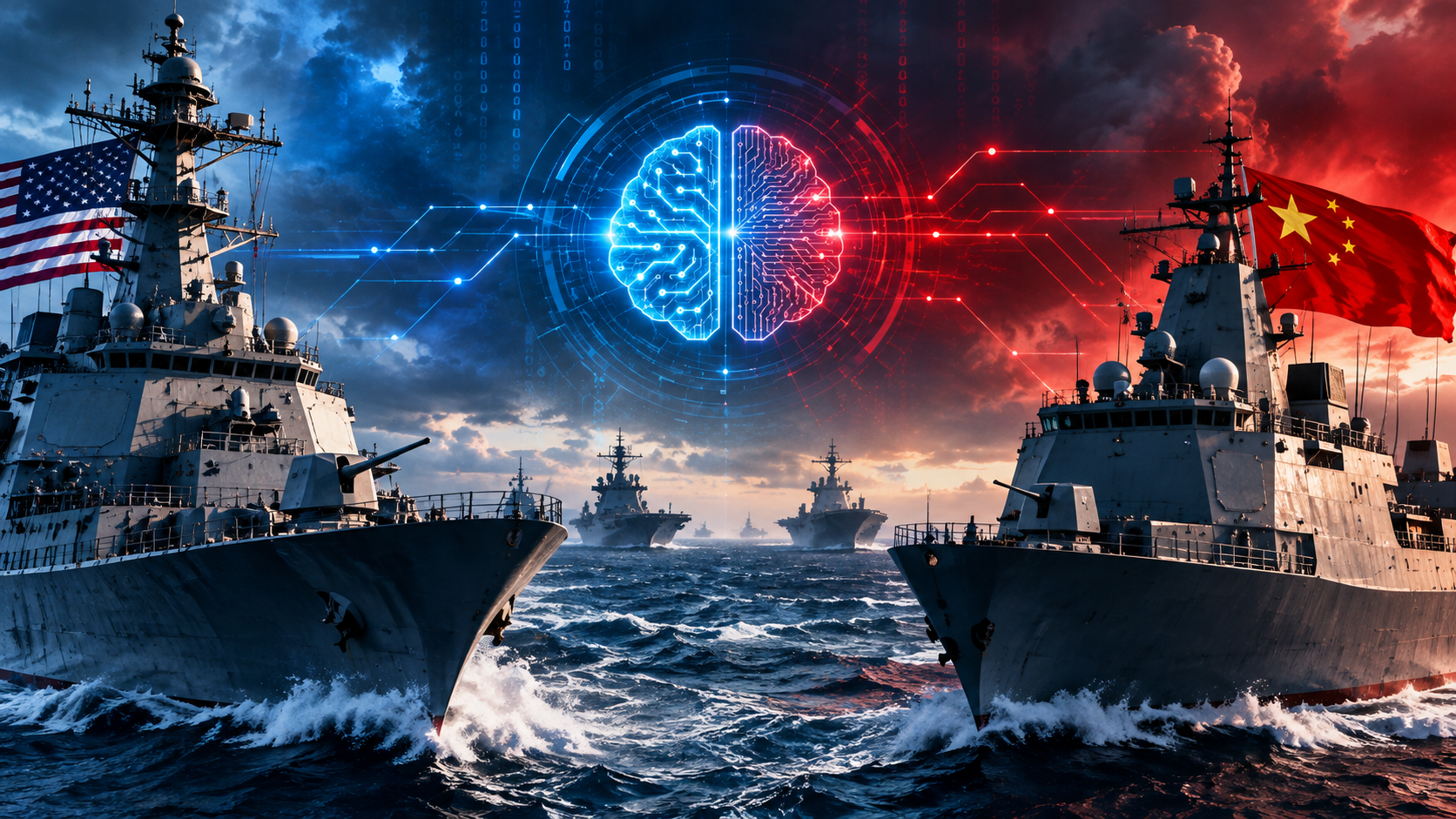
Washington: The U.S. military came dangerously close to intercepting a Chinese vessel in the Middle East after an intelligence report incorrectly claimed that the ship was carrying components linked to a nuclear weapons program, a CNN report claimed.
According to report, the intelligence assessment circulated within the U.S. military during the war with Iran and prompted officials to prepare for a potential operation against the vessel. Sources familiar with the incident told CNN that armed personnel were preparing to board the ship and that military aircraft had already been deployed.
The situation changed when officials examined the intelligence more closely and discovered that the report had been produced with assistance from an artificial-intelligence chatbot. The AI system had incorrectly identified the material listed in the ship’s cargo manifest.
One source described the report as completely false, while another told CNN that the incident could have triggered a much broader conflict between the United States and China.
The episode highlights growing concerns about the U.S. military’s rapidly expanding use of artificial intelligence. AI tools are increasingly being used to analyze intelligence, identify potential targets, process large amounts of information and assist with military planning.
According to report, the analyst involved in the incident used an AI chatbot to analyze intelligence concerning the vessel’s manifest. The system combined information from publicly available sources with classified intelligence and produced an inaccurate conclusion. The analyst then used AI to help turn the findings into a formal intelligence report, which was subsequently distributed to military officials.
CNN reported that it was unclear whether the chatbot was a commercially available system or an AI tool developed for the U.S. government.
The incident comes as the Pentagon accelerates its adoption of AI. Defense Secretary Pete Hegseth announced an AI strategy aimed at expanding the technology’s use throughout the military and reducing barriers to experimentation.
However, CNN reported that the military’s adoption of AI remains decentralized, with different agencies and units using different systems and operating under varying safety procedures. There is also no single standard for verifying information produced by AI systems.
The incident illustrates a major challenge surrounding military AI: even when humans remain involved in decision-making, inaccurate AI-generated information can potentially influence high-stakes decisions before it is properly verified.
Sources cited in the report also warned that AI-generated errors, sometimes known as “hallucinations,” have occurred elsewhere within the intelligence community. Some officials are concerned that the pressure to produce intelligence more quickly could make analysts more likely to accept AI-generated conclusions without sufficient scrutiny.
The episode serves as a warning about the risks of deploying AI in military and intelligence operations, particularly when decisions involve potential armed confrontations between major powers

