

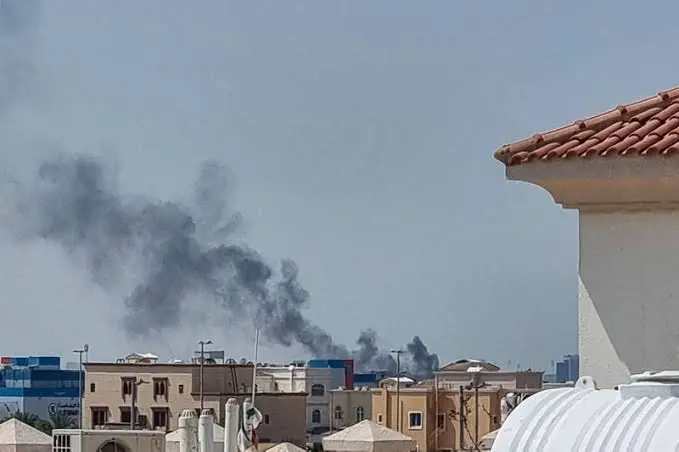
Iran’s Revolutionary Guard says it attacked 10 vessels after the U.S. destroyed five Iranian oil tankers, while Jordan says it intercepted most of the Iranian missiles fired at a U.S.-used military base.
CAIRO/WASHINGTON: Iran’s Islamic Revolutionary Guard Corps (IRGC) said Wednesday it launched ballistic missiles at a military base in Jordan used by U.S. forces and attacked 10 ships near the Strait of Hormuz, sharply escalating the six-month-old conflict.
The strikes came after the United States said it had destroyed five Iranian oil tankers in attacks that Washington described as retaliation for Iranian attempts to strike a U.S. Navy warship with ballistic missiles.
U.S. Secretary of State Marco Rubio said Iran was continuing to target American naval assets and warned that further attacks would result in additional Iranian tankers being destroyed.
Iran subsequently fired missiles toward a U.S.-used base near Al Azraq in Jordan. The IRGC claimed the attack caused heavy damage, but Jordan said its air defences intercepted 18 of the 20 missiles, while the remaining two landed in unpopulated areas. Jordan reported no casualties.
A U.S. official also said the Iranian attack was ineffective and that all American personnel at the base were accounted for.
Tensions rise around Strait of Hormuz
The IRGC separately claimed it attacked 10 vessels, including two U.S. ships and eight oil tankers, as they attempted to cross what Iran described as a “prohibited and unsafe” area of the Strait of Hormuz.
The strategically vital waterway has already seen a dramatic reduction in shipping traffic following repeated Iranian attacks, raising concerns over global energy supplies.
Iran has also warned oil tankers at ports in Kuwait and Bahrain. A maritime security source said an LNG tanker was damaged at the Emirati port of Khor Fakkan, although responsibility for the incident remained unclear.
Houthis add to regional pressure
The escalation comes as Iran-aligned Houthi forces in Yemen have intensified attacks on Saudi Arabia. Tuesday’s attacks reportedly wounded 73 people and set oil facilities ablaze, adding further pressure to regional energy supplies.
The combined attacks on military targets, shipping routes and energy infrastructure have shattered a month of relative calm and increased fears that the conflict could spread across the region.
Oil approaches $100
Oil prices rose further in early Wednesday trading as markets reacted to the growing threat to tanker traffic through the Strait of Hormuz. Brent crude moved toward $100 a barrel, reflecting fears that prolonged disruption could tighten global oil supplies.
With U.S. and Iranian forces now striking military and energy-linked targets while regional allies become increasingly involved, the latest exchange marks one of the sharpest escalations of the war in recent months.

