

By Aisha Naz Ansari, Sadia Muzaffar Bhutta, Sohail Ahmad and Sajid Ali
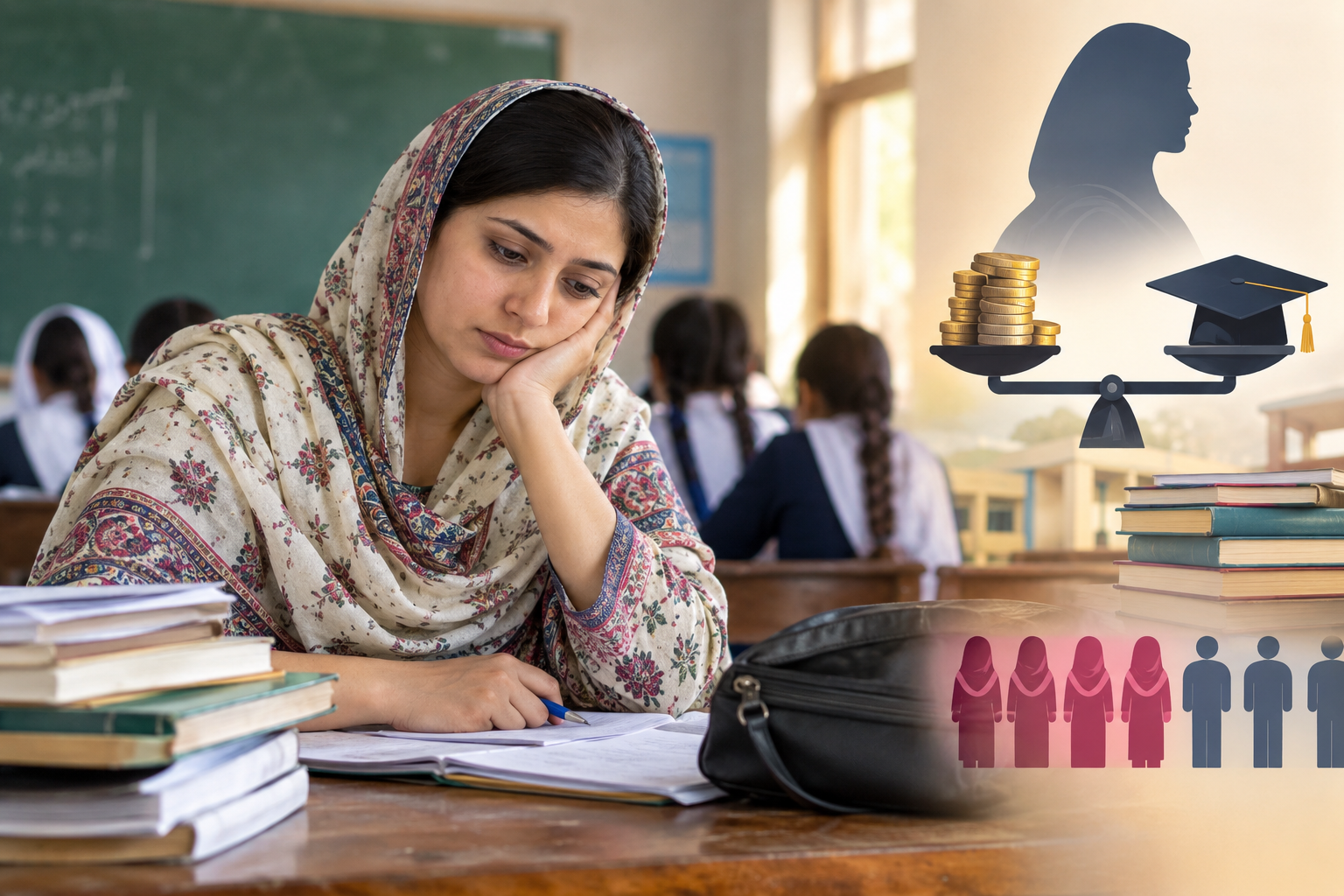
Karachi: A significant disparity in teachers’ salaries across Pakistan has emerged, with employment sector and gender playing a major role in determining earnings, according to an analysis of 436 science and mathematics teachers.
The findings highlight growing concerns over teachers’ financial security, professional wellbeing and retention, particularly in the country’s private-school sector, where low wages and insecure employment remain widespread.
Public-sector teachers dominate higher salary brackets
The analysis reveals a sharp divide between public- and private-sector teachers.
Among teachers earning more than Rs100,000 per month, 94% are employed in government schools. In contrast, private-school teachers account for 85% of those earning below Rs20,000 and 93% of those earning below Rs30,000 per month.
Researchers attribute the disparity to differences in employment conditions between the two sectors.
Government schools generally operate under structured salary scales and provide greater employment security, pensions and clearer opportunities for career progression. Many private schools, particularly low-fee institutions, rely on lower salaries, contractual employment and working arrangements that can contribute to higher staff turnover.
Women heavily concentrated in the lowest salary brackets
Gender adds another significant dimension to the salary gap.
Women make up approximately 70% of the teachers included in the study, yet they are disproportionately represented among the lowest-paid workers.
According to the analysis, 82% of teachers earning less than Rs20,000 per month are women.
By comparison, men account for approximately 30% of the teachers examined but represent 53% of those earning six-figure salaries.
Researchers say the pattern reflects broader inequalities in Pakistan’s labour market, including occupational segregation and disparities in earnings and professional opportunities.
Higher qualifications do not guarantee better pay
The salary gap is particularly striking because many of the teachers surveyed possess substantial academic qualifications.
Approximately 62% hold a Master’s degree, while another 15% have an MPhil qualification. Women constitute the majority among teachers holding both qualifications.
However, the analysis suggests that higher educational attainment does not necessarily translate into higher salaries.
Around 14% of MPhil-qualified teachers earn less than Rs30,000 per month, with many of them employed in the private-school sector.
The findings indicate that a teacher’s employment sector and gender may have a greater influence on earnings than academic qualifications alone.
Low pay raises concerns over teacher retention
Researchers warn that low salaries, contractual employment and limited opportunities for professional development could contribute to financial stress, burnout and dissatisfaction among private-school teachers.
Such conditions may encourage qualified teachers to seek employment in the public sector, which is generally perceived as offering greater job security, social protection and career progression.
The movement of teachers from private to public schools, however, can increase staff turnover in private institutions. Frequent changes in teaching staff can disrupt classroom continuity and potentially affect students’ learning outcomes.
Salary inequality could affect education quality
The researchers argue that the issue extends beyond teachers’ individual financial circumstances.
Persistent salary disparities, unequal professional opportunities and high turnover could undermine Pakistan’s efforts to improve learning outcomes, particularly in science and mathematics.
The issue also has broader implications for the United Nations Sustainable Development Goals, including SDG 4, which focuses on inclusive and quality education, and SDG 5, which promotes gender equality.
Researchers call for reforms
The authors have called for transparent, equitable and gender-responsive salary structures across the education sector.
They also recommend formal employment contracts, clearer career-development pathways and improved access to professional training and development opportunities.
According to the researchers, improving teachers’ financial and professional conditions is essential for retaining qualified educators, improving their wellbeing and strengthening Pakistan’s education system.
They emphasize that fair compensation for teachers should not be viewed merely as a labour-market issue, but as an investment in the country’s educational future.
Note:
The findings are based on the blog “Equally qualified yet unequally paid teaching workforce in Pakistan,” authored by Aisha Naz Ansari, Sadia Muzaffar Bhutta, Sohail Ahmad and Sajid Ali and published on March 10, 2026, by UKFIET – The Education and Development Forum.

