

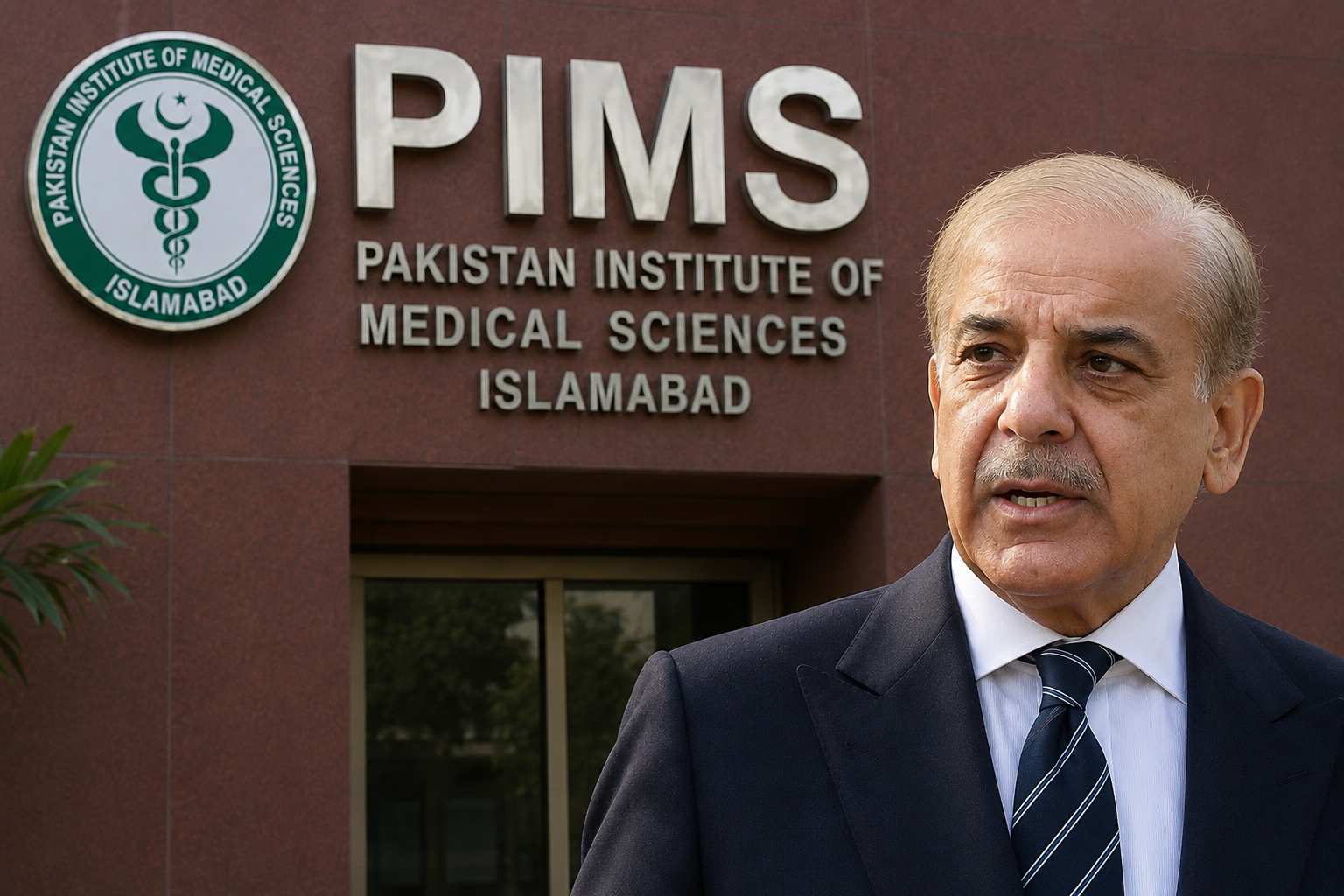
How the fire erupted: 14 newborns dead as PM Orders inquiry into PIMS tragedy
ISLAMABAD: At least 14 newborn babies were killed after a devastating fire swept through a maternity and nursery ward at the Pakistan Institute of Medical Sciences (PIMS) in Islamabad early Wednesday, triggering outrage across the country and prompting Prime Minister Shehbaz Sharif to order a high-level inquiry.
The fire broke out at around 7 a.m. local time inside the ward where newborn babies were receiving care. Initial reports suggested that the blaze may have been triggered by an explosion involving an air-conditioning compressor. However, authorities say the exact cause has yet to be determined.
Federal Minister for Parliamentary Affairs Tariq Fazal Chaudhry said investigators were examining the scene and cautioned against drawing conclusions before the forensic investigation is complete.
He said gas lines and plastic medical equipment may have contributed to the rapid spread of the fire. According to him, the presence of oxygen supply systems intensified the blaze after the initial explosion.
“Whatever caused the explosion, the fire spread because of the oxygen supply,” he told reporters.
Two doctors, a nurse and other staff members were present in the ward at the time and survived, he said. Hospital workers were reportedly able to rescue one child.
Questions Over Safety and Emergency Response
The tragedy has also raised serious questions about fire safety and emergency preparedness at one of Pakistan’s largest government-run hospitals.
Reports circulated that the ward door may have been locked, potentially delaying efforts to rescue the infants. However, PIMS Executive Director Rana Imran Sikandar rejected those claims, saying the door was not locked and staff were present.
He said security arrangements were in place to prevent the theft of newborn children, citing previous incidents of child abduction at government hospitals.
Sikandar also said the hospital did not rely on a water-based fire suppression system in the ward but had fire extinguishers available. According to him, 24 fire extinguishers were used during efforts to control the blaze.
PM Suspends Health Secretary, Orders High-Level Probe
Prime Minister Shehbaz Sharif chaired an emergency high-level meeting following the tragedy and expressed anger over the incident.
The federal government suspended Federal Health Secretary Aslam Ghauri and removed him from his position as the prime minister ordered a detailed investigation to determine how the disaster occurred and whether negligence contributed to the deaths.
A high-level inquiry committee has been formed, headed by former Interior Secretary Shahid Khan. Other members include Establishment Secretary Dr. Barrister Nabeel Awan.
The prime minister said the circumstances surrounding the deaths of newborn children were “irreparable” and ordered authorities to identify those responsible and ensure strict action.
Shehbaz Sharif said he was deeply saddened by the tragedy and promised that anyone found responsible would face the consequences.
President Asif Ali Zardari also expressed grief over the deaths and called for those responsible to be identified and dealt with according to the law. He stressed the need to ensure effective fire safety and emergency arrangements at hospitals, particularly in wards caring for vulnerable patients and newborns.
Political Outrage and Calls for Accountability
The incident has sparked strong criticism of hospital management and the government’s handling of the country’s public healthcare system.
Former federal minister Fawad Chaudhry called for Health Minister Mustafa Kamal to resign, arguing that responsibility for such a major tragedy could not end with suspensions or transfers.
Former minister Shireen Mazari echoed those concerns, describing the incident as a reflection of alleged negligence, mismanagement and deteriorating conditions at PIMS and children’s healthcare facilities.
The PIMS tragedy is now expected to intensify scrutiny of Pakistan’s public hospitals, many of which have long faced criticism over aging infrastructure, inadequate funding, staff shortages and weak emergency preparedness.
As investigators begin examining the charred nursery and reconstructing how the fire spread, the central question remains: Was this an unforeseeable accident — or a preventable disaster caused by failures in safety, management and emergency response?
For the families of the 14 newborns who died, the answer may determine whether one of Pakistan’s worst hospital fires in recent memory leads to meaningful accountability — or becomes another national tragedy followed by unanswered questions.

