

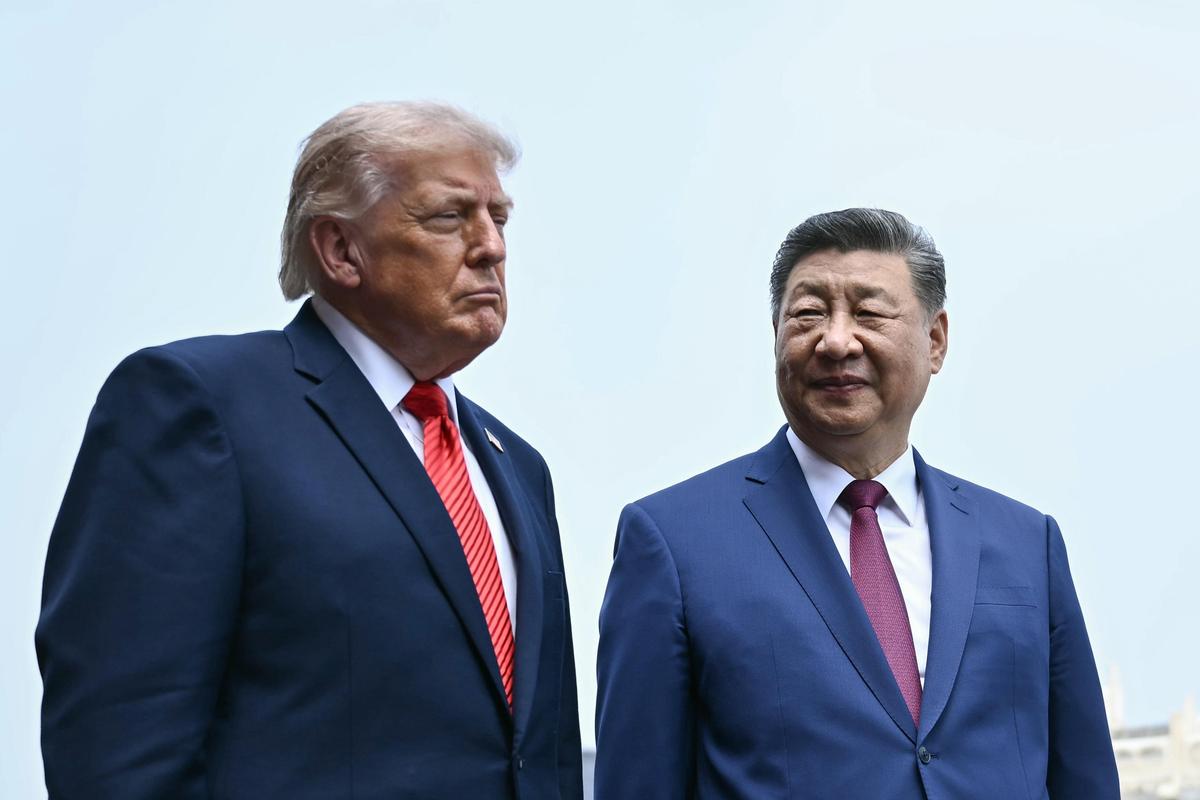
Washington: (Reuters) Chinese President Xi Jinping is heading to Washington this week with a stronger economic hand than when he last met U.S. President Donald Trump, as China’s trade engine continues to expand despite years of American tariff pressure.
Xi and Trump are due to meet on September 24, with expectations for a major breakthrough remaining limited. The immediate priority is whether the two sides can extend a trade truce agreed last year that helped prevent a deeper shock to the global economy.
A Changing Balance of Power
In the months since their previous meeting, China has continued to expand trade with countries around the world, while Trump has faced declining approval ratings at home and the political and economic costs of the war with Iran.
Analysts say this has reduced the likelihood that Xi will arrive in Washington ready to make major concessions. Instead, Beijing appears focused on maintaining stability with Washington while using the breathing room to strengthen its economy and prepare for longer-term competition.
“Xi is not really looking for anything tangible,” said Jon Czin, a foreign policy expert at the Brookings Institution. He argued that China wants to preserve the current understanding with Trump while strengthening its position.
China’s Export Boom Continues
Trump returned to office promising to use tariffs to reduce what he described as an unfair trade imbalance with China. But the campaign has produced fewer results than Washington expected.
China’s global trade surplus is on track to exceed $1 trillion for a second consecutive year. Despite restrictions on low-cost parcels from Chinese online retailers, more than half of roughly 6,500 product categories China has sold to the United States this year have recorded growth compared with 2025.
The figures suggest that American tariff pressure has not fundamentally weakened China’s export machine.
Scott Kennedy of the Center for Strategic and International Studies said the Trump administration had expected massive unilateral pressure to force Beijing into concessions, but that strategy had failed to produce the anticipated outcome.
Taiwan Could Be the Bigger Bargaining Chip
Trade may dominate the summit, but Taiwan could prove more difficult.
U.S. allies in Asia are concerned that Trump could use Washington’s support for Taiwan as leverage in negotiations with Beijing. Trump has already described a pending $14 billion U.S. arms package for Taiwan as a potential “negotiating chip.”
Beijing, meanwhile, has signaled that its position on Taiwan could influence what it is willing to offer Washington on other issues.
China and the Iran War
Washington also sees Xi as someone who could potentially influence Iran and help bring the war to an end. But Beijing has shown little willingness to apply the kind of pressure Trump wants.
Reuters reported that Chinese goods worth billions of dollars continue reaching Iran through a sanctions-evasion network, although China’s foreign ministry has said it is unaware of such a scheme.
For now, both leaders appear to have an incentive to avoid another major confrontation.
Trump is focused on Iran and other foreign-policy challenges, while Xi is using the relative stability in U.S.-China relations to strengthen China’s domestic resilience.
The result could be a summit defined less by dramatic agreements than by a recognition that the balance of power between Washington and Beijing has changed.

