

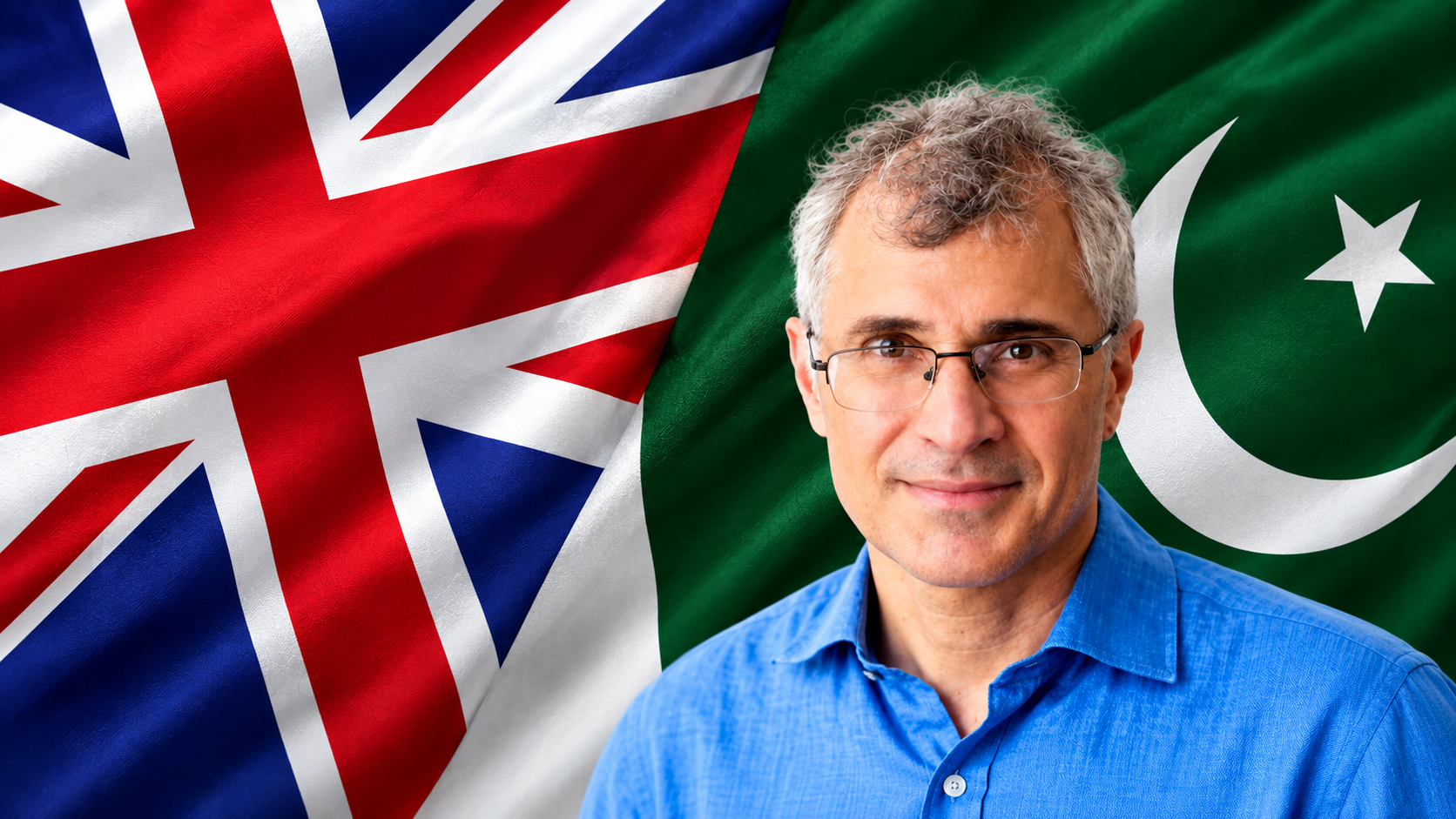
LONDON: The relationship between Pakistan and the United Kingdom has evolved significantly over seven decades, with migration, trade, education and people-to-people links continuing to form its strongest foundations, according to economist and policy expert Jonathan Portes.
Speaking in a discussion with Aisha Ali Khan on The Pakistan Playbook, Portes, professor of economics and public policy at King’s College London and former chief economist at the UK Cabinet Office under Prime Minister Gordon Brown, said the relationship had endured major political and economic changes and was likely to remain important for both countries.
Portes traced the origins of modern UK-Pakistan relations to the period following the creation of Pakistan in 1947. The British Nationality Act of 1948 helped create opportunities for citizens of Commonwealth countries to move to Britain, leading significant numbers of Pakistanis to travel to the UK for employment.
Many Pakistani migrants found work in textile industries in northern England, while others entered the health service. Portes said the geographical concentration of Pakistani communities in cities such as Bradford and other parts of northern England helped shape their subsequent economic and social experience.
He noted that deprivation and segregation have become particular challenges in some areas with concentrated Pakistani populations, while stressing that immigrant outcomes are shaped by an interaction between communities and the places in which they settle.
The discussion also highlighted the substantial contribution of British Pakistanis to British society, from business and professional careers to politics, culture, food and the arts.
Migration and Visa Concerns
Immigration remains one of the most sensitive issues in UK politics, with Pakistanis increasingly affected by the broader debate over legal migration, student visas and irregular migration.
Portes said Brexit ended free movement between Britain and the European Union, but the UK continued to need migrant workers. He noted that immigration subsequently increased significantly from countries including India, Nigeria and Pakistan.
The economist argued that the distinction between legal migration and irregular migration is important when assessing the political debate surrounding immigration.
The discussion also examined difficulties facing Pakistani students seeking UK visas. Portes described the issue as damaging to both countries and argued that Islamabad and London should cooperate to reduce fraudulent applications while ensuring that genuine students are able to study in Britain.
Trade Over Aid
Economic ties were another major focus of the discussion.
The programme noted that remittances from British Pakistanis to Pakistan have become a significant financial link between the two countries. Portes said remittances would remain important but argued that Pakistan should gradually diversify towards exports, investment and other forms of economic engagement.
He pointed to opportunities in services, technology and other non-traditional export sectors, while emphasizing the importance of domestic economic reforms to improve Pakistan’s competitiveness.
Portes said Brexit could increase the importance of Britain’s trading relationships with faster-growing economies, including Pakistan. He argued that Pakistan could benefit by identifying sectors in which it can compete internationally, particularly compared with regional competitors such as India and Bangladesh.
The discussion also touched on the sensitive cases involving Pakistani nationals and UK-Pakistan cooperation on criminal matters. Portes said individual cases should be managed without allowing them to undermine the broader relationship.
He ultimately described people as the greatest strength of UK-Pakistan relations, pointing to the more than 1.5 million British Pakistanis living in the UK.

