

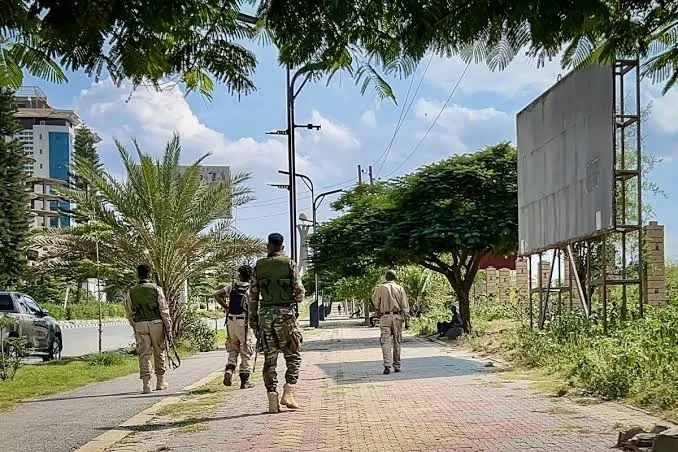
Addis Ababa: (Agencies) Tigray rebels were reported to be withdrawing from Mekelle, the regional capital of northern Ethiopia, on Saturday as federal forces and pro-government militias moved closer to the city.
The latest developments mark a major escalation in fighting and have revived fears of another large-scale conflict in the region.
A local journalist and residents told the news agencies that fighters and senior leaders of the Tigray People’s Liberation Front (TPLF) were leaving Mekelle after government forces captured the city’s airport.
Fighting began less than two weeks ago and has already spread across parts of northern Ethiopia. The violence has raised fears of a return to the devastating conflict that hit Tigray between 2020 and 2022.
However, information from the region remains difficult to verify. Communications have reportedly been disrupted, while the BBC says it has been unable to report directly from Tigray. Several battlefield claims therefore remain unconfirmed.
TPLF Leaders Leave Mekelle
A local journalist told AFP that TPLF fighters and senior leaders were leaving Mekelle.
Federal troops had not entered the city when the report emerged. Residents said government offices and police stations had lost their security personnel, raising fears of looting and disorder.
One resident told AFP that government and public property could become vulnerable because security forces were no longer protecting the facilities.
Another resident expressed concern about lawlessness and called for authorities to restore security quickly.
The situation remained fluid as government forces approached Mekelle and TPLF fighters appeared to pull back from positions around the city.
Government Forces Advance Towards Mekelle
The latest offensive follows several days of fighting across Tigray, Afar and Amhara.
The TPLF initially advanced into parts of Afar and Amhara, reportedly alongside local militias. Government forces and allied groups later pushed the rebels back before launching a counter-offensive into Tigray.
The Critical Threats Project at the American Enterprise Institute said government forces were advancing towards Mekelle along three main routes.
On Friday, the pro-government Tigrayan militia known as the Tigray Peace Forces said it had taken “full control” of Mekelle Alula Aba Nega Airport, about 10 kilometers from the regional capital.
The militia also claimed to have captured Milazat, about 20 kilometres southeast of Mekelle.
The BBC has not independently verified the claim about Milazat.
A humanitarian source who spoke anonymously to AFP said the TPLF had also been completely pushed out of Afar.
If confirmed, the reported withdrawal from Mekelle would represent a major battlefield setback for the TPLF.
Capturing the regional capital, however, would not necessarily end the conflict.
A diplomatic source told AFP that senior TPLF leaders had already left Mekelle and warned that fighting could continue even if federal forces captured the city.
Memories of the 2020-22 Tigray War
The latest fighting represents the most serious escalation in northern Ethiopia since the Tigray war began in 2020.
That conflict lasted two years and caused widespread civilian suffering.
An African Union mediator previously estimated that about 600,000 people died during the war, although the exact death toll remains disputed.
A peace agreement ended the conflict in 2022, but tensions between the federal government and Tigrayan political and military groups continued.
The renewed violence has now raised fears that the fragile peace could collapse.
Last month, the TPLF joined six other armed movements in an alliance against Prime Minister Abiy Ahmed’s government.
The alliance includes the Fano militia from the Amhara region.
The groups say they want to remove Abiy’s government from power. Their cooperation could widen the conflict by bringing several Ethiopian regions and armed groups into the fighting.
Ethiopia and Eritrea Cut Diplomatic Ties
The military crisis has also triggered a major diplomatic confrontation between Ethiopia and Eritrea.
On Thursday, Ethiopia announced that it would close its embassy in Asmara. Addis Ababa also ordered 10 Eritrean diplomats to leave the country within 48 hours.
Ethiopian authorities accused the diplomats of activities that threatened national security.
Eritrea responded by severing diplomatic relations with Ethiopia.
Its foreign ministry said it had no choice but to respond to Ethiopia’s decision and warned of serious consequences.
The diplomatic break marks a sharp reversal in relations between the two countries.
In 2018, Abiy restored diplomatic ties with Eritrea after two decades of hostility.
The reopening of the border sparked celebrations as families separated for years reunited.
The rapprochement also contributed to Abiy receiving the Nobel Peace Prize in 2019.
Five years later, relations between the neighbours have deteriorated sharply.
Why Eritrea Matters
Ethiopia and Eritrea share a long and troubled history.
The two countries fought a devastating border war between 1998 and 2000.
Relations improved in 2018, but major disagreements continued. One key issue has been Ethiopia’s desire for reliable access to the Red Sea.
As a landlocked country, Ethiopia has repeatedly stressed the strategic importance of sea access.
Eritrea, meanwhile, has long feared that Ethiopia could seek access to its coastline through political or military pressure.
The Eritrean port of Assab remains particularly important in this debate.
TPLF leader Debretsion Gebremichael said in a video published late Thursday that the conflict was regional. He described it as a struggle over control of the Red Sea.
His remarks reflect wider concerns that the fighting in Tigray could become part of a broader geopolitical struggle involving the Horn of Africa and the Red Sea.
Eritrea Denies Involvement
Ethiopian officials have accused Eritrea of supporting the rebel alliance fighting against the federal government.
Eritrean authorities have rejected those allegations.
Speaking to the BBC before diplomatic relations were severed, Eritrean Information Minister Yemane Gebremeskel denied claims that Eritrean forces were fighting in Tigray.
He accused Ethiopia’s ruling Prosperity Party of blaming neighboring countries for its internal problems.
A pro-government militia commander fighting in Tigray, however, told the BBC that Eritrean soldiers had taken part in fighting on the front lines.
The BBC said it could not independently verify the claim.
The competing accounts remain difficult to assess because communications with Tigray have been disrupted.
Phone and internet services have reportedly been cut, although it remains unclear who was responsible.
Ethiopia and Egypt Also Expel Diplomats
The diplomatic crisis has also affected relations between Ethiopia and Egypt.
Ethiopia expelled an Egyptian diplomat and gave him 48 hours to leave the country.
The Ethiopian government did not publicly explain the decision.
Egypt responded by ordering an Ethiopian embassy official to leave within the same period.
The latest dispute comes after years of tension over Ethiopia’s Grand Ethiopian Renaissance Dam, known as GERD, on the Blue Nile.
Ethiopia says the dam will support electricity generation and economic development.
Egypt depends heavily on the Nile for its water supply and has repeatedly raised concerns about the effect of the dam on water flows.
The dispute remains one of the most sensitive issues in northeast Africa.
Ethiopia has also accused Egypt, Eritrea and Sudan of supporting the opposition alliance led by the TPLF.
Egypt, Eritrea and Sudan have denied those allegations.
The African Union Commission has urged Ethiopia, Eritrea and Egypt to exercise restraint as tensions increase.
Explosions Reported in Addis Ababa
The diplomatic crisis followed reports of explosions in Ethiopia’s capital, Addis Ababa.
Powerful blasts were heard overnight on Wednesday, including near Ethiopia’s military headquarters.
Diplomatic sources cited by AFP said small drones were the most likely cause.
An opposition-linked source claimed that drone strikes had targeted military headquarters and other locations in the capital.
Independent sources have not verified those claims.
The reports have nevertheless added to concerns about the possible spread of the conflict.
If confirmed, drone attacks in Addis Ababa would suggest that the fighting had reached beyond the main battlefields in northern Ethiopia.
A Conflict With Regional Implications
The renewed fighting has already affected Ethiopia’s relations with several neighboring countries.
Eritrea has severed diplomatic ties with Ethiopia, while relations with Egypt have also deteriorated.
Sudan has also faced accusations from Addis Ababa, although the countries named by Ethiopia deny supporting the opposition alliance.
The geography of the conflict makes the situation especially sensitive.
Tigray borders Eritrea, while Afar extends towards the Red Sea. Amhara is another major Ethiopian region affected by the fighting.
The crisis now connects Ethiopia’s internal political struggle with wider tensions around the Red Sea and the Horn of Africa.
Debretsion’s reference to the Red Sea highlights this broader dimension.
For Ethiopia, the crisis involves the stability and survival of the federal government.
For Eritrea, the security of its territory and coastline remains a major concern.
For Egypt, the conflict intersects with the long-running dispute over the Nile and GERD.
What Happens if Mekelle Falls?
The reported withdrawal of TPLF fighters and leaders from Mekelle could give the Ethiopian government a major military and political advantage.
Mekelle serves as the political center of Tigray and a key base for the TPLF.
A federal takeover of the city would therefore represent a major setback for the group.
Yet capturing Mekelle would not necessarily end the war.
The diplomatic source cited by AFP warned that fighting could continue even if federal forces took control of the city.
The TPLF and allied groups have operated across several regions. The opposition alliance formed last month also brings together several armed movements.
A prolonged insurgency could therefore follow a government takeover of Mekelle.
That possibility matters because the previous Tigray war also saw repeated changes in battlefield control before the 2022 peace agreement.
Mekelle Residents Prepare for More Fighting
Residents of Mekelle are preparing for the possibility of further fighting.
Banks and shops have reportedly closed as government forces approach.
Security personnel have also left government offices and police stations, increasing fears of disorder.
Residents are concerned about looting, violence and a possible breakdown of public order.
At the same time, the reported TPLF withdrawal suggests that federal forces may have gained ground quickly.
Limited independent access to the region makes the exact military situation difficult to assess.
For residents, the immediate concern is safety.
Many people in Tigray have already experienced the destruction caused by the 2020-22 war. They now fear another round of violence.
A New Crisis in the Horn of Africa
The fighting in Tigray has developed into a wider security and diplomatic crisis.
Federal forces and allied militias are moving deeper into Tigray as the TPLF reportedly withdraws from Mekelle.
Government forces have reportedly captured the airport, while the Tigray Peace Forces claim to have taken Milazat. The BBC has not independently verified all of these battlefield claims.
At the same time, Ethiopia’s diplomatic relations with Eritrea have collapsed. Tensions with Egypt have increased, while reports of explosions in Addis Ababa have raised further concerns about the conflict’s reach.
It remains unclear whether Mekelle will fall quickly or whether the conflict will develop into a prolonged insurgency.
The wider consequences could extend far beyond Tigray.
The crisis brings together several major issues, including Ethiopia’s internal political struggle, regional rivalries, relations with Eritrea, access to the Red Sea, the Nile dispute with Egypt and the strategic interests of neighboring states.
The previous Tigray war showed the enormous human cost that prolonged fighting can create.
For residents of Mekelle and surrounding areas, the immediate concern is whether the latest military advance will lead to another extended conflict.

