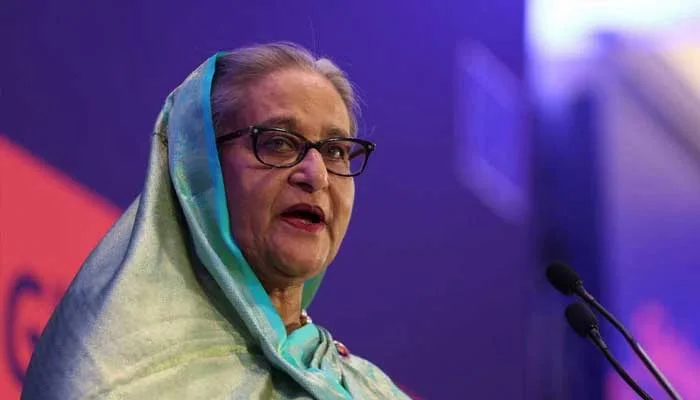
LAHORE MIRROR (Reuters, AP) – Ousted Bangladeshi Prime Minister Sheikh Hasina plans to return home from more than two years of exile in India on December 16, her spokesperson told Reuters on Tuesday, though the government said she can only return through extradition.
It is the first time Hasina, 79, has set a specific date for her return, potentially raising political and legal tensions in a country where her party is banned and where
violence has become deadly since she sought a
new passport and other documents earlier this month.
The pressure comes as Prime Minister Tarique Rahman, who took office in February, grapples with setbacks including one of the world’s
worst measles outbreaks and protests by garment workers demanding higher wages.
In addition to seeking the paperwork, cancelled months after she fled to Delhi following the uprising against her, Hasina has urged the Bangladeshi government to arrange her return on flag carrier Biman Bangladesh Airlines.
“Since Sheikh Hasina was flown to India on a Bangladesh aircraft on August 5th, 2024, she now calls upon the government to arrange for her air transport from Delhi back to Dhaka,” the spokesperson, Syed Mozammel Ali, said in a statement.
“Having exiled her contrary to the Constitution under such circumstances, it is now the responsibility of the government to make possible her return to Bangladesh on Victory Day on December 16th.”
The government, however, reiterated that she can only be extradited by India, having been sentenced to death by a Bangladeshi court last year in her absence for ordering a deadly crackdown on a student-led uprising. Hasina has denied the charges from exile.
“Hasina is a convicted criminal; a fugitive terrorist,” Humaiun Kobir, Bangladesh’s minister of state for foreign affairs, told Reuters.
“She can only return home by extradition treaty; in handcuffs, and under strict surveillance.”
On the request to arrange a flight, Kobir said: “Bangladesh will not entertain any such delusional request”.
India’s foreign ministry declined to comment. In April, the ministry said it was examining Bangladesh’s request to extradite her and that it wanted to “engage constructively with the new government and further strengthen bilateral ties”.
“It is deeply symbolic that she has chosen 16 December, our Victory Day, for her planned return to Bangladesh. We firmly believe that she will celebrate this historic day among her people, honoring the great victory achieved under the leadership of her father, Bangabandhu Sheikh Mujibur Rahman,” Abu Obaidha Arin, an aide to Hasina, told The Associated Press.
“We are equally confident that, she will definitely return and under her leadership post return, Bangladesh will once again advance towards peace, stability and prosperity,” Arin said.
Hasina’s father led the war against Pakistan and was the first leader of the country. He was assassinated in a military coup in 1975, along with most of his family members. Hasina and her younger sister survived as they were outside the country at the time.
Earlier this month, in an interview with The Associated Press, Hasina said she would return to the country in December at any cost, and even death could not prevent her from returning home.
Three days after Hasina’s fall, Nobel Peace Prize laureate Muhammad Yunus took over as head of an interim government and later handed over power to the elected government of Rahman’s Bangladesh Nationalist Party. The Yunus-led government banned Hasina’s Awami League party, and it was not allowed to contest the election in February.