

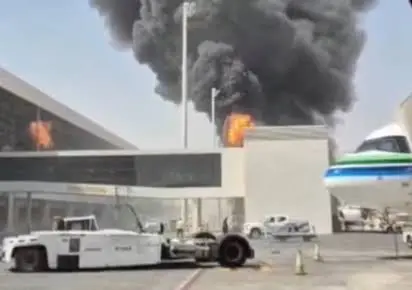
Reuters : Saudi Arabia suspended public warnings of imminent military attacks days before a series of strikes on Riyadh airport killed at least 18 people and injured more than 300.
The Saudi government has not explained why its national early-warning system stopped issuing alerts before four attacks on the capital over the past week. The silence has raised concerns about the kingdom’s vulnerability to missile and drone strikes and its ability to protect residents, visitors and critical infrastructure.
The attacks occurred amid Saudi Arabia’s conflict with Yemen’s Iran-aligned Houthi movement, which has intensified pressure on the kingdom and other Gulf states.
Concerns Over Public Safety
Saudi Arabia introduced mobile phone and social media alerts in May to warn the public about potential military threats. However, the system stopped issuing security warnings despite a rise in Houthi attacks in the days leading up to last week’s strikes.
The last alert before the attacks was issued on September 29 for the southern province of Najran, according to posts on the Saudi Civil Defence authority’s account on X.
On Monday, October 12, the authority resumed issuing alerts, warning residents in Riyadh and southern cities about potential threats. Reuters could not establish whether the decision was directly linked to the airport attacks.
Saudi Civil Defense, which operates under the Interior Ministry, and the government’s media office did not respond to questions about the suspension of public warnings.
Sultan Alamer, a Saudi academic and senior resident fellow at the Middle East Policy Council, said the government appeared to be trying to maintain public confidence while conducting military operations.
He argued that suppressing warnings to avoid disruption could ultimately increase public anxiety by leaving people uncertain about the risks.
Complaints Over Night-Time Alerts
Two officials familiar with the matter told Reuters that representatives of an allied Western government had asked Saudi authorities why the alerts had stopped before the airport attacks.
According to the officials, the Saudi response was that the warnings caused disruption, with some citizens complaining that alerts woke them up at night. Saudi officials did not respond to requests for comment on that account.
Former US ambassador to Saudi Arabia Michael Ratney said Riyadh was attempting to balance its response to Houthi attacks with efforts to preserve normal life and economic confidence.
However, he warned that the absence of alerts could create the very public unease the government was trying to prevent.
Other Gulf countries have adopted different approaches. Qatar has issued mobile phone warnings before nearly every attack, while Bahrain and Kuwait have repeatedly sounded sirens instructing residents to seek shelter.
Saudi Arabia Faces a Difficult Defense Challenge
Ali Shihabi, a Saudi analyst close to the government, said the kingdom faced a major challenge in protecting its extensive territory and critical infrastructure.
Airports, oil facilities and pipelines are spread across a vast area, making it difficult to defend every potential target simultaneously. Shihabi said Saudi Arabia needed more air-defense capabilities, including Patriot missile systems, interceptors and missile batteries.
The attacks have also raised questions about the security of international travel and business activity in Riyadh.
Despite the violence, Saudi Arabia hosted the World Petroleum Council Energy Congress on Monday. However, several major oil executives withdrew from the event following the attacks.
Energy Minister Prince Abdulaziz bin Salman acknowledged the risks but insisted that the kingdom would continue pursuing its economic ambitions. He told attendees that hosting the gathering did not mean the danger had disappeared.
Embassies Issued Separate Warnings
While Saudi authorities were not issuing public security alerts, Western embassies in the kingdom continued sending internal warnings about potential missile and drone attacks to their staff, according to people familiar with the matter and alerts reviewed by Reuters.
The warnings drew on intelligence from the United States and other Western governments, alongside information from Saudi authorities.
Embassy staff received alerts around the time of two earlier airport strikes. However, people familiar with the matter said they had not received an internal warning before Saturday’s attack, which was the deadliest of the week.
According to Reuters, it could not determine why no warning was issued before that strike.
The incident has intensified scrutiny of Saudi Arabia’s public-warning arrangements as the kingdom confronts growing security risks while trying to maintain confidence in its safety and economic stability.

