

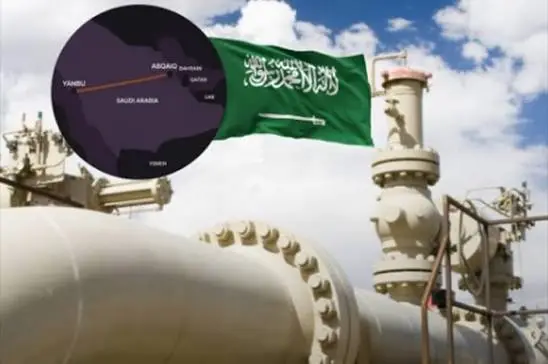
Riyadh: Saudi Arabia has temporarily shut its strategic East-West crude oil pipeline after drones launched from Iraq targeted the facility, adding to mounting concerns over global energy supplies as conflict involving Iran and the expansion of Houthi forces in Yemen threaten key oil and shipping routes.
The Saudi Energy Ministry said the pipeline was closed as a precaution after multiple drones struck facilities in the Riyadh and Medina regions on Thursday morning. The attacks triggered fires and caused damage, while several people were reportedly injured. Emergency and security teams were deployed to contain the damage and assess the condition of the infrastructure.
The East-West pipeline is a critical component of Saudi Arabia’s energy infrastructure. Stretching roughly 1,200 kilometres, it transports crude from the kingdom’s oil fields in the east to export terminals on the Red Sea, allowing Saudi Arabia to bypass the Strait of Hormuz, one of the world’s most important oil transit routes. The pipeline has a capacity of approximately 7 million barrels per day.
Its strategic importance has increased as tensions around the Gulf threaten conventional maritime routes for Saudi oil exports.
Riyadh has so far refrained from launching retaliatory action against Iraq. Saudi authorities said Baghdad would be given an opportunity to prevent further attacks originating from Iraqi territory, while warning that the kingdom reserves the right to take necessary measures to defend its sovereignty, population and critical infrastructure.
Iraq has acknowledged that the drones were launched from a province near the Iranian border. Following the disclosure, Baghdad removed the operations commander in Maysan province and announced an investigation into the incident. The Gulf Cooperation Council condemned the attack, describing it as a dangerous escalation and a threat to Saudi Arabia’s territory and vital installations.
The pipeline strike comes amid growing Houthi activity along Yemen’s Red Sea coast. Iran-aligned Houthi forces have reportedly expanded their control over strategically important areas, including territory around the port city of Mokha, bringing them closer to a major international maritime corridor.
The Houthis have also claimed control over parts of the Bab al-Mandab Strait, although they have said Saudi vessels would be exempt from restrictions on navigation.
In July, the group declared a maritime embargo targeting Saudi Arabia and threatened to disrupt Saudi oil shipments passing through Bab al-Mandab, which connects the Red Sea to the Gulf of Aden and wider global markets. Houthi attacks on Saudi energy infrastructure and other targets earlier this week reportedly injured more than 70 people.
The developments have intensified pressure on both the Strait of Hormuz and Bab al-Mandab, two critical chokepoints for global energy trade.
Oil markets have responded sharply to the escalating risks. Crude prices moved above $100 a barrel this week for the first time in months, with prices ending the week more than 8% higher.
The temporary closure of Saudi Arabia’s East-West pipeline has added another layer of uncertainty, raising questions over the resilience of global oil supplies if attacks on energy infrastructure and major shipping corridors continue.

