

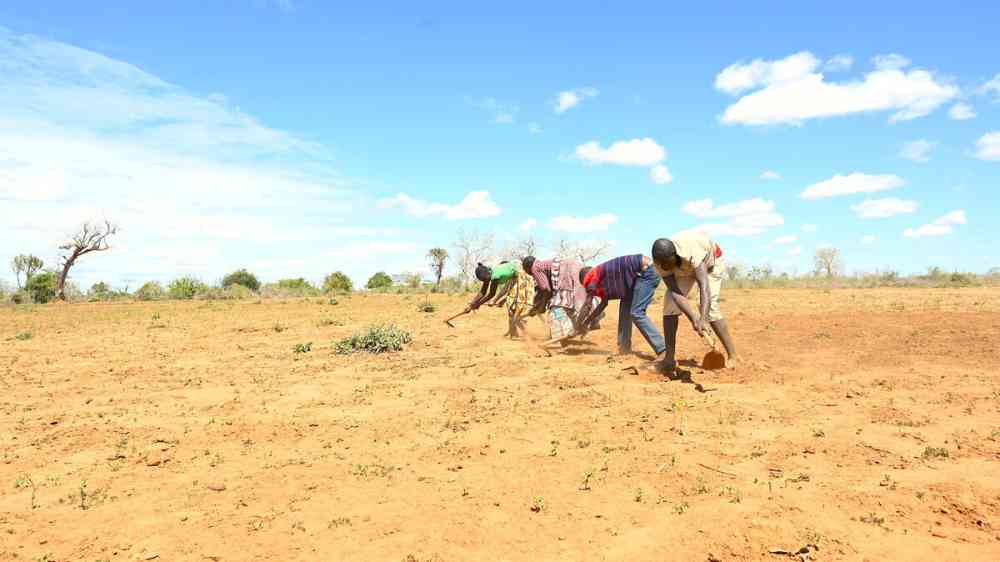
NAIROBI: The strengthening El Niño climate pattern and a positive Indian Ocean Dipole (IOD) are raising fears of another major humanitarian crisis in the Horn of Africa.
The region could once again face extreme weather similar to the conditions that caused severe flooding in late 2023. Millions of people remain at risk because of conflict, displacement, food shortages and rising prices.
The latest forecasts suggest that El Niño could become one of the strongest events on record. It may continue through early 2027.
The World Meteorological Organization (WMO) expects El Niño to strengthen and reach its peak toward the end of 2026. It also estimates an almost 100% chance that the weather pattern will continue through February 2027.
Different Weather Risks Across East Africa
El Niño will not affect every country in the same way.
Ethiopia, South Sudan, Uganda and parts of Kenya are already facing drier-than-normal conditions. However, the October-to-December rainy season could bring heavier rainfall to other parts of the region.
Forecasters expect a higher risk of flooding across equatorial East Africa. Southern Somalia, southern Ethiopia and large parts of Kenya could face some of the heaviest rains.
The combination of heavy rain and existing humanitarian problems could place millions of people under further pressure.
The Danish Refugee Council’s recent analysis, El Niño Through a Displacement Lens, says the impact will depend on more than rainfall. The number of people exposed, their existing conditions and the time available for preparation will also play a major role.
For displaced families, El Niño could make existing problems worse. Heavy rain can damage shelters, destroy crops and kill livestock. It can also damage roads, disrupt markets and increase the risk of disease.
UN Calls for More Funding
A senior United Nations official has called for more funding to help countries prepare for the growing threat.
Rein Paulsen, director of the Office of Emergencies and Resilience at the UN Food and Agriculture Organization (FAO), said governments had prepared response plans. However, many lack the money needed to put those plans into action.
“Plans are in place, and actions are already being taken, but we need more financing and support to deliver,” Paulsen told journalists in Nairobi after a fact-finding mission to Sudan.
Sudan faces an especially serious funding gap. FAO has requested $193 million for its Sudan emergency and resilience programme under its 2026–2028 Emergency Response Plan. So far, donors have provided only $44.1 million.
Paulsen urged governments, aid agencies and development partners to view El Niño alongside the region’s other crises.
Conflict, displacement, high food prices and extreme weather could combine to create greater pressure on vulnerable communities.
Early Action Could Reduce the Impact
FAO and the World Food Programme launched a joint early-action plan on June 18. The plan covers 22 high-risk countries across Africa, Asia and the Pacific, as well as Latin America and the Caribbean.
The programme seeks $202 million to protect 8.8 million vulnerable people from extreme weather linked to El Niño.
Paulsen said early action could save lives and reduce the cost of humanitarian operations.
“It is always more expensive to respond to a crisis than to mitigate its impact in advance,” he said.
He urged governments and humanitarian agencies to improve monitoring and act before extreme weather reaches its peak.
FAO has also launched several measures to support farmers in Sudan. These include drought-resistant seeds suited to local conditions and wider access to irrigation.
The agency is also running livestock vaccination campaigns. It is working to secure animal feed and water supplies to help farmers protect their livelihoods.
Lessons From the 2023 Floods
The experience of 2023 has increased concerns about the current outlook.
That year, El Niño and a positive Indian Ocean Dipole helped bring exceptionally heavy rainfall to parts of East Africa. The floods caused widespread damage after the region had already suffered years of severe drought.
The current threat is therefore about more than rainfall alone.
Humanitarian agencies must also consider where vulnerable people live, how many have already been displaced and whether governments have enough resources to respond.
With El Niño expected to strengthen and the main rainy season approaching, UN officials and aid agencies are calling for early action.
The coming months will test whether governments and humanitarian organisations can prepare vulnerable communities before extreme weather turns existing problems into a wider humanitarian crisis.

