

Lahore Mirror: Afghanistan’s children are already facing drought, floods, extreme heat and dust storms. Now, the desperate search for water is creating another danger: deep, narrow wells that have become deadly traps.
In Afghanistan, the struggle for water is increasingly reaching underground.
As drought dries up traditional water sources, communities are being forced to dig deeper wells in search of groundwater. But these wells can bring a new danger, especially for children. Narrow shafts can extend dozens or even hundreds of feet into the ground, often with little protection around their openings.
A child can disappear into one in seconds.
The danger is highlighted by a series of recent and past rescue cases, including the remarkable survival of a five-year-old boy in Kandahar and the death of another five-year-old, Haidar, in Zabul in February 2022.
Together, the cases reveal a wider problem: Afghanistan’s water crisis is creating hazards that extend far beyond a lack of drinking water.
UNICEF: 8.8 million children face multiple climate hazards
The scale of the wider crisis is underlined by UNICEF’s Children’s Climate Risk Report 2026.
Published on June 16, 2026, the report says more than 8.8 million children in Afghanistan — about 41% of the country’s children — are exposed to at least three overlapping climate hazards.
UNICEF identifies floods, droughts, heatwaves and extreme heat, as well as sand and dust storms among the major threats.
More than 75% of Afghan children are exposed to drought, while more than 50% face longer and more frequent heatwaves. More than 1.7 million children are exposed to riverine floods.
Afghanistan ranks highest in South Asia for child vulnerability, according to UNICEF.
These are not separate problems. They reinforce one another.
Drought reduces water supplies. Extreme heat increases water demand. Floods can destroy infrastructure and contaminate water sources. Food production suffers, while families become more dependent on increasingly deep groundwater.
And that is where another danger emerges.
The fourth danger: the deep water well
The deep well is not a fourth climate hazard identified by UNICEF.
But for children living in drought-hit communities, it can become a fourth danger created by the water crisis itself.
When groundwater levels fall, farmers and villagers have to drill or dig deeper. Some wells that were once relatively accessible can become extremely deep and narrow.
Many are located close to homes or agricultural land. Some are abandoned after they dry up. Others are covered with temporary materials that can weaken over time.
For a child, an opening only a few inches wider than their body can be enough to become a death trap.
The BBC reported that Afghanistan has hundreds of thousands of deep, narrow wells dug during the search for water. Some have become difficult to see or secure, creating a serious risk for children playing around farms and villages.
One such well in Kandahar had reportedly been dry for two years. Farmers had covered its opening with wood and soil, but the wood eventually rotted and the soil loosened.
That was the well into which five-year-old Zainullah fell.
The 70-metre rescue
Zainullah fell into a narrow, dry well in southern Afghanistan while playing with friends.
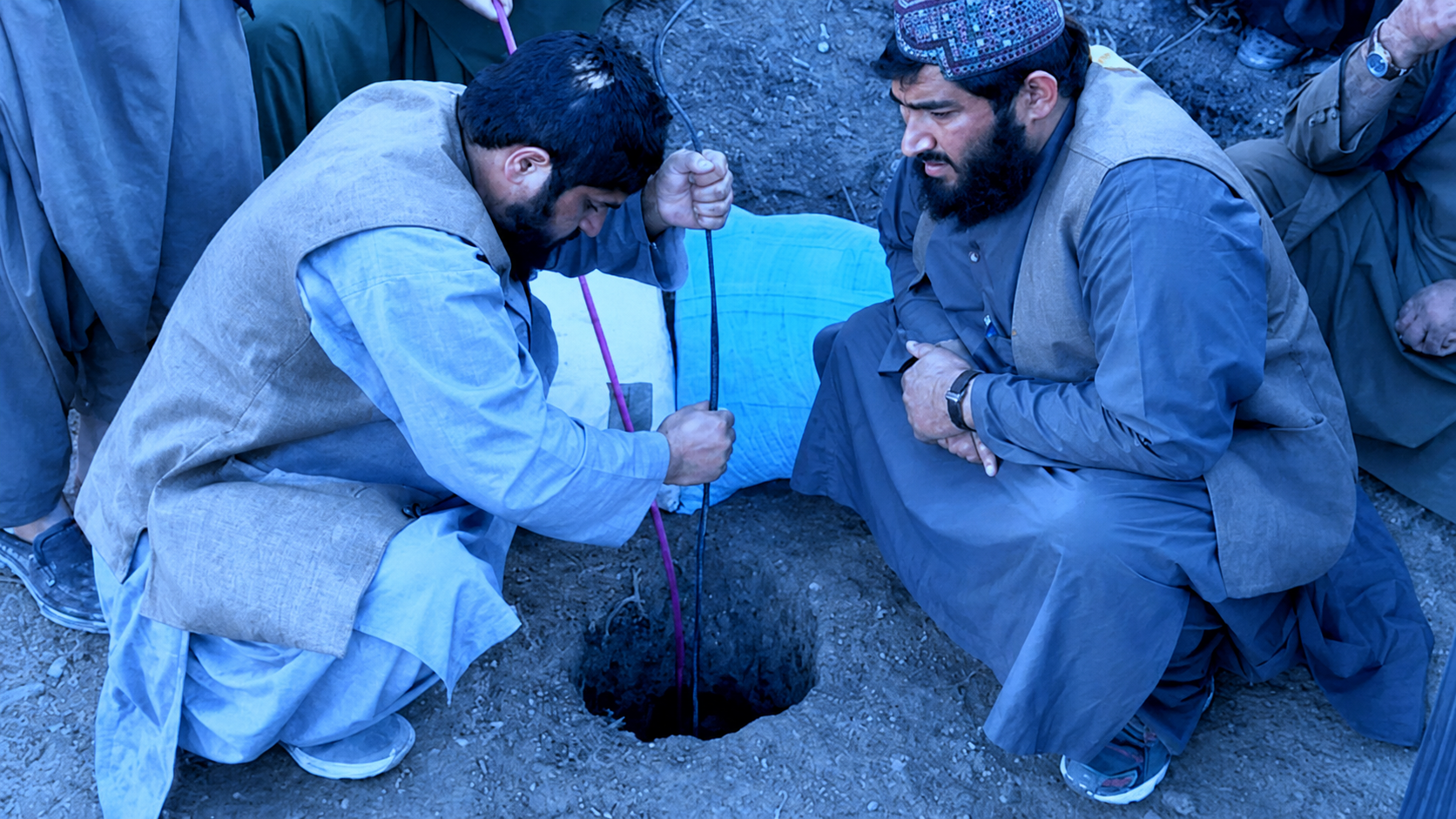
The shaft was around 70 metres deep — roughly 230 feet — and only about 30 centimetres, or 12 inches, wide.
The narrow opening made the rescue extraordinarily difficult. An adult could not simply climb down after him.
Three children initially attempted to descend but were pulled back because of breathing difficulties.
Then an 11-year-old boy, Hazrat Umar, volunteered to go down.
Umar had experience helping with underground rescues. He was lowered into the shaft and eventually reached Zainullah.
The operation was also supported by Mirajun Abdullah, a 28-year-old mobile-phone seller from Helmand province who had developed his own rescue technology.
Mirajun built a camera-and-monitor system that allows people on the surface to see what is happening underground. According to the BBC, after another child, Haidar, fell into a well about a year after a 2021 tragedy, Mirajun realised that rescuers needed a practical way to reach children trapped deep underground.
He developed a device linking a camera to a computer so rescuers could see the trapped person and lower a rope to the right position. He even tested the system by lowering his own five-year-old son into a 25-metre (82-foot) well. The method worked.
The BBC reported that Mirajun had taken part in 113 rescue operations over four years and helped save around 70 people. In another case, he used the equipment to reach five-year-old Noor Agha in Helmand, who had been trapped about 140 metres underground for four hours.
But even Mirajun’s equipment could not solve every problem.
Zainullah was not directly beneath the well opening. He had fallen into a larger space at the bottom, meaning the camera could not simply travel vertically to reach him.
The boy had also been injured when villagers initially tried to reach him using thorny branches.
That left rescuers with a dangerous choice.
Someone had to go down.
Hazrat Umar eventually reached Zainullah and secured him with another rope. People on the surface then pulled both children upward.
Two ambulances were waiting.
Zainullah survived and was taken to hospital. He was discharged the following day.
But the rescue also demonstrated how limited Afghanistan’s specialist capacity remains. The BBC reported that only a small number of trained specialists were available for this kind of dangerous well rescue.
Haidar: the rescue that came too late
Four years earlier, another Afghan child became trapped in a well.
On February 18, 2022, the Daily Mail reported the death of five-year-old Haidar, who had spent three days trapped inside a well in Shokok village, Zabul province.
Haidar was approximately 33 feet down a narrow shaft.
His grandfather, Haji Abdul Hadi, told the Daily Mail that the boy had fallen while trying to help adults dig a new borehole in the drought-ravaged village.
The rescue operation lasted three days.
Rescuers lowered a light and camera into the well. Engineers used bulldozers to dig an angled trench beside the shaft. When a large rock blocked the final section, workers used pickaxes to continue.
Officials said Haidar was trapped inside an 82-foot shaft, around 33 feet below the surface.
When rescuers finally reached him, he was still alive.
Zabul police spokesman Zabiullah Jawhar said Haidar was breathing after he was pulled out and that medical workers gave him oxygen.
But as they attempted to carry him to a helicopter, he died.
Taliban Interior Ministry senior adviser Anas Haqqani expressed sorrow over the boy’s death.
The Daily Mail report was published on February 18, 2022, shortly after another child, five-year-old Rayan Awram, died following a four-day rescue attempt in Morocco.
The two cases showed how dangerous these narrow wells can be even when rescuers reach the trapped child alive.
Why are Afghan wells getting deeper?
The central problem is water.
Afghanistan has faced repeated droughts, declining water availability and pressure on agricultural communities.
Farmers need water for crops. Families need water for drinking and livestock. When surface sources disappear, groundwater becomes the fallback.
But groundwater is not unlimited.
As wells dry up, communities can be pushed toward deeper drilling. Solar-powered pumping systems can also make it easier to extract groundwater, potentially increasing pressure on underground reserves.
That creates a vicious cycle.
Drought forces deeper wells. Deeper wells increase the physical danger. And abandoned or poorly covered wells can remain dangerous long after the water disappears.
The danger therefore does not end when a well goes dry.
A dry well can become a hidden shaft.
A rescue problem as well as a water problem
Afghanistan’s well accidents expose another gap: the lack of specialist rescue infrastructure.
A child trapped dozens of meters underground may need cameras, oxygen, ropes, trained rescuers, medical teams and heavy machinery.
A well that is only 30 centimeters wide can prevent an adult from entering.
A rescue team may have to dig a second shaft beside the original well, then create a horizontal tunnel to reach the child.
That process can take hours or days and may create the risk of a collapse.
Haidar’s rescue in 2022 showed how difficult that operation can be.
Zainullah’s rescue showed that better equipment, experience and courage can sometimes make the difference.
But relying on individual volunteers and improvised equipment is not a sustainable child-protection strategy.
The warning beneath the ground
UNICEF’s warning about Afghanistan’s climate-vulnerable children therefore has a deeper meaning.
The climate crisis does not always arrive as a dramatic flood or a heatwave.
Sometimes it begins with a dry riverbed.
Then a farmer digs deeper.
The well produces less water.
Another well is dug.
And eventually a community can be surrounded by deep, narrow shafts that children may not even recognise as dangerous.
Afghanistan’s children are already facing multiple climate hazards. Drought, floods, extreme heat and dust storms are placing millions at risk. But the struggle to adapt to water scarcity can create another deadly hazard beneath their feet.
The deep water well is not officially UNICEF’s fourth climate hazard.
But in drought-hit Afghanistan, it is becoming a fourth danger for children — one created by the desperate search for the water they need to survive.
The solution is not simply to rescue children after they fall.
Communities need safe water supplies, properly engineered wells, secure covers, mapping of abandoned shafts, public warnings, specialist rescue teams and equipment.
Otherwise, the wells dug to find life may continue to become places where children lose it.

