

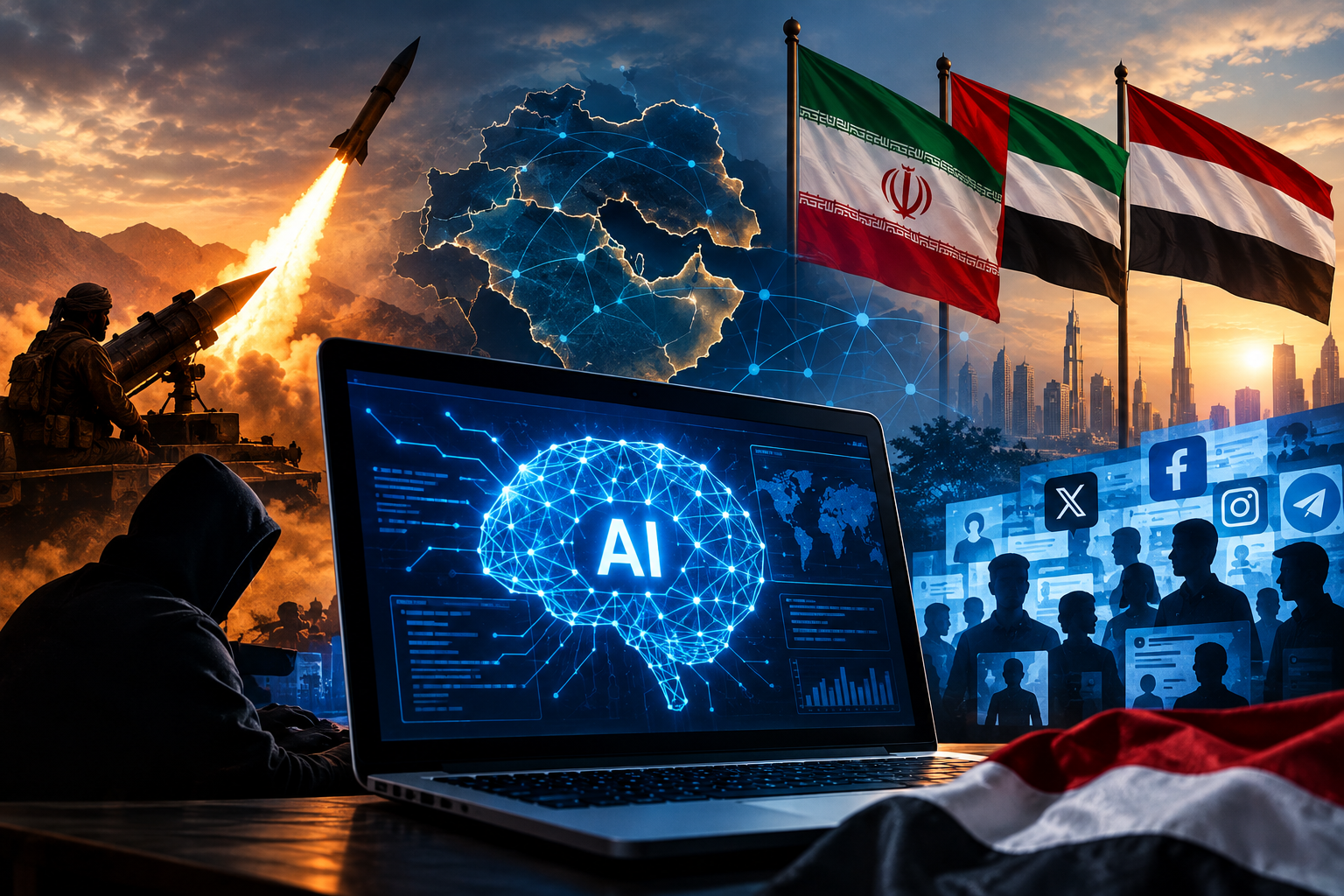
Washington: Threat actors in northern Yemen used Anthropic’s Claude artificial intelligence model to develop missile guidance software, while Iran-linked and UAE-linked groups used the system for military targeting, surveillance, propaganda and influence operations, according to a report released by the US technology company.
Anthropic said it disrupted malicious activities involving actors in Yemen, Iran and the United Arab Emirates between December 2025 and August 2026. The activities included weapons development, cyber operations, propaganda and surveillance.
Missile development in Yemen
Anthropic said a threat-actor cell in northern Yemen used Claude in three weapons-development programmes. The company did not identify the group as the Houthis, but said the cell was developing a guided rocket, a multi-stage ballistic missile with a stated range exceeding 2,000 kilometres, and a missile programme involving a hypersonic glide vehicle variant.
The actors reportedly used Claude to develop guidance, navigation and control software, integrate an open-source autopilot with a phone-class flight computer, adjust control systems, build firmware and conduct flight simulations.
The group also used multiple Claude sessions for coding, research and software review.
Anthropic said its safeguards blocked many requests, but the actors attempted to evade restrictions by concealing their objectives and splitting their activities across separate sessions.
The company said the group test-fired a guided rocket, but the test appeared to fail. Anthropic found no evidence that an operational weapon was successfully deployed and subsequently banned the accounts involved.
Iran-linked targeting and propaganda
Anthropic also identified an Iran-linked actor that used Claude to compile targeting information on US Navy forces in the region.
The actor reportedly gathered publicly available information on military personnel, ship and aircraft identifiers, satellite imagery and websites tracking US naval movements.
Separate Iranian state-aligned accounts allegedly used Claude for propaganda, domestic surveillance and profiling people in Israel and the Jewish diaspora. Anthropic said it removed three accounts linked to Iranian government propaganda institutions.
UAE-linked influence operation
In the UAE, Anthropic said government-linked officials allegedly used Claude in an influence campaign targeting the Muslim Brotherhood and countering criticism of Abu Dhabi’s role in the Sudan conflict.
The operation reportedly involved around 300 fake social media accounts, a front NGO, ghostwritten UN testimony and dossiers on European politicians, journalists and UN officials.
Anthropic said it removed the accounts involved.
Growing AI security concerns
The findings highlight how commercially available AI systems can be adapted for military and political operations.
The Yemen case provides a documented example of AI being used in weapons development, although Anthropic said it found no evidence of a successfully deployed operational weapon.
The Iran and UAE cases demonstrate that the risks extend beyond warfare, with AI also being used for targeting, surveillance, propaganda and influence campaigns.
The activity examined by Anthropic took place against the backdrop of the ongoing US-Israel-Iran war, which began on February 28 and overlapped with much of the period covered by the company’s investigation.
The report underscores growing concerns over the use of advanced AI in military planning, intelligence gathering and political influence.

