

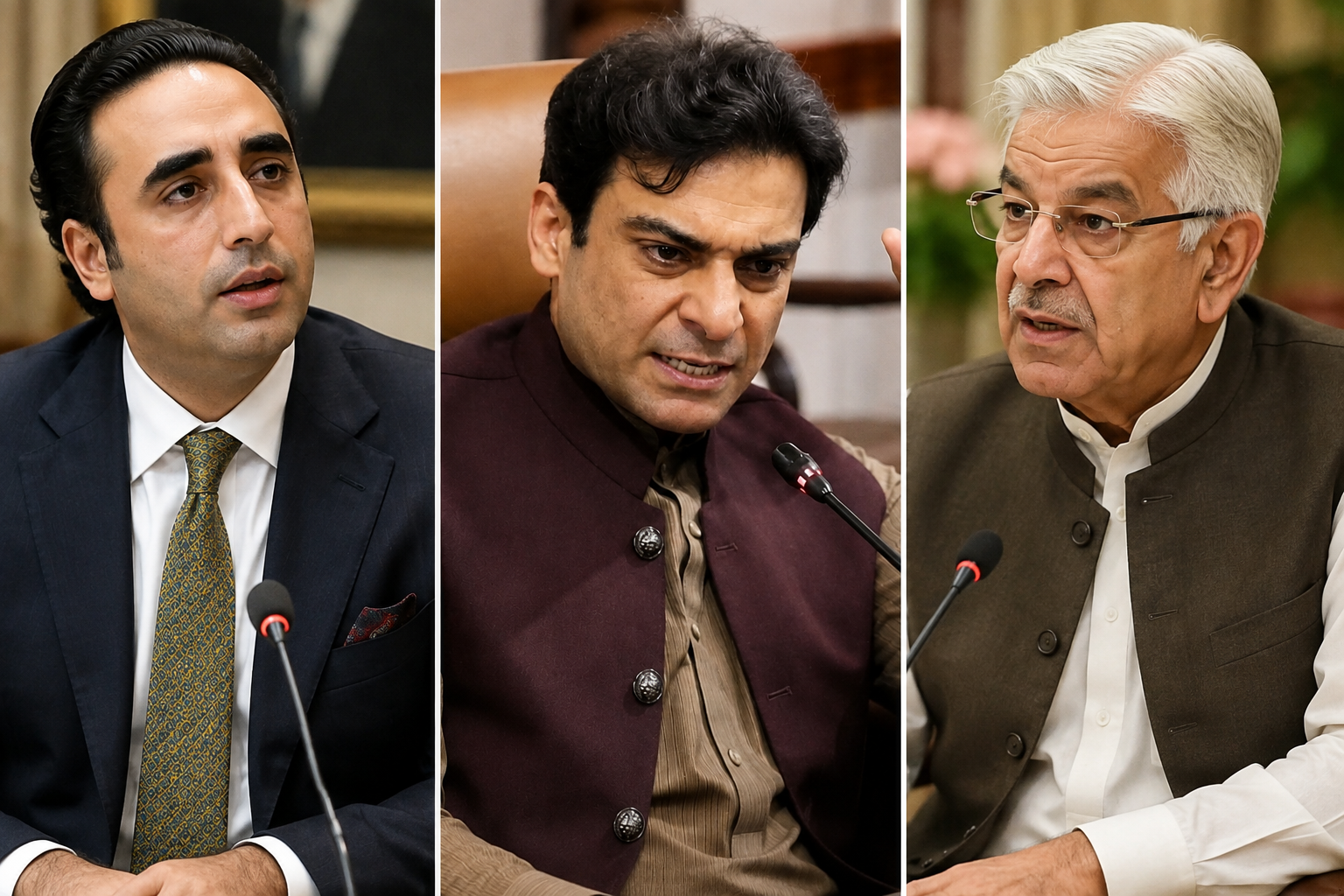
ISLAMABAD: Differences between the Pakistan Muslim League-Nawaz (PML-N) and its coalition partner, the Pakistan Peoples Party (PPP), have surfaced over proposals to create new provinces and administrative units, with the debate drawing particular attention to the future of Sindh, while former Punjab CM Hamza Shahbaz has called for stronger local governments.
The issue gained momentum after Defense Minister Khawaja Asif criticized what he described as the PPP’s inconsistent position on the creation of new provinces.
Asif said the PPP had supported the demand for a separate Saraiki province in Punjab but opposed proposals involving the creation of multiple provinces or administrative units in other parts of the country.
He also pointed to the 18th Amendment, arguing that the constitutional principle of devolution had not been implemented in its true spirit.
According to Asif, Pakistan could consider using its existing 36 divisions as a basis for a new administrative structure, while other geographical arrangements could also be examined.
Sindh Assembly Opposes Division
The PPP has taken a firm position against any proposal to divide Sindh.
The Sindh Assembly recently passed a resolution rejecting proposals to divide the province, alter its territorial boundaries or establish new administrative units within Sindh.
Senior PPP leader Nisar Ahmed Khuhro moved the resolution, which lawmakers present approved unanimously. Opposition members walked out during the proceedings.
The resolution described Sindh as a historic, civilizational and constitutional entity. It also highlighted the province’s role in the Pakistan movement, including the Sindh Legislative Assembly’s 1943 resolution supporting the creation of Pakistan.
The PPP leadership has also reiterated its opposition to any division of Sindh.
According to The News, PPP Chairman Bilawal Bhutto-Zardari and President Asif Ali Zardari discussed the issue during a meeting in London. The report said the party leadership agreed to resist any move to divide the province.
Debate Gains Momentum
The latest dispute follows a broader discussion within the government about Pakistan’s administrative structure.
Interior Minister Mohsin Naqvi previously raised concerns about the country’s governance system and called for new administrative units and greater devolution of authority.
Planning Minister Ahsan Iqbal later proposed dividing Pakistan’s four provinces into 12 to 15 provinces.
Iqbal has also suggested an alternative model based on around 160 fully empowered district governments if political consensus on new provinces remains difficult.
He has argued that the 18th Amendment transferred 17 subjects from the federal government to the provinces in 2010, but provinces did not subsequently devolve sufficient powers to local governments.
Iqbal has therefore called for stronger local institutions and a national debate on the country’s administrative structure.
Local Governments Offer Alternative
The debate has also brought renewed attention to the role of local governments.
Former Punjab chief minister and PML-N leader Hamza Shehbaz has supported the idea of strengthening local governments and giving them constitutional protection.
Under such a model, Pakistan could retain its existing provinces while transferring greater administrative and financial authority to districts, municipalities and local councils.
Supporters of the approach argue that stronger local institutions could improve service delivery without requiring changes to provincial boundaries.
PPP’s Position on Sindh
For the PPP, the issue carries particular political significance because Sindh remains the party’s main provincial stronghold.
The question of Karachi is especially sensitive. The city has long featured in political debates over local government powers, provincial authority, representation and control of resources.
Any proposal to alter Sindh’s administrative or territorial structure could therefore have wider political implications for the province.
The PPP has maintained that it supports administrative reforms but opposes any move to divide Sindh.
Coalition Faces Political Test
Despite the growing differences, there is no immediate indication that the dispute will lead to the collapse of the PML-N-PPP coalition.
Both parties continue to have political reasons to maintain their cooperation at the federal level.
The PPP remains an important parliamentary partner of the PML-N, while the PML-N has an interest in maintaining political stability at the center.
The disagreement over new provinces could therefore remain part of broader negotiations between the coalition partners.
For now, the two parties appear to be maintaining different positions on the issue.
The PML-N leadership has increasingly linked administrative reform with devolution and stronger local governments, while the PPP has made clear that it will resist any proposal to divide Sindh.
The debate is likely to continue as political parties discuss the country’s administrative structure and the implementation of devolution under the 18th Amendment.
Any actual change to provincial boundaries, however, would require a much broader political and constitutional process than the current public debate.

