

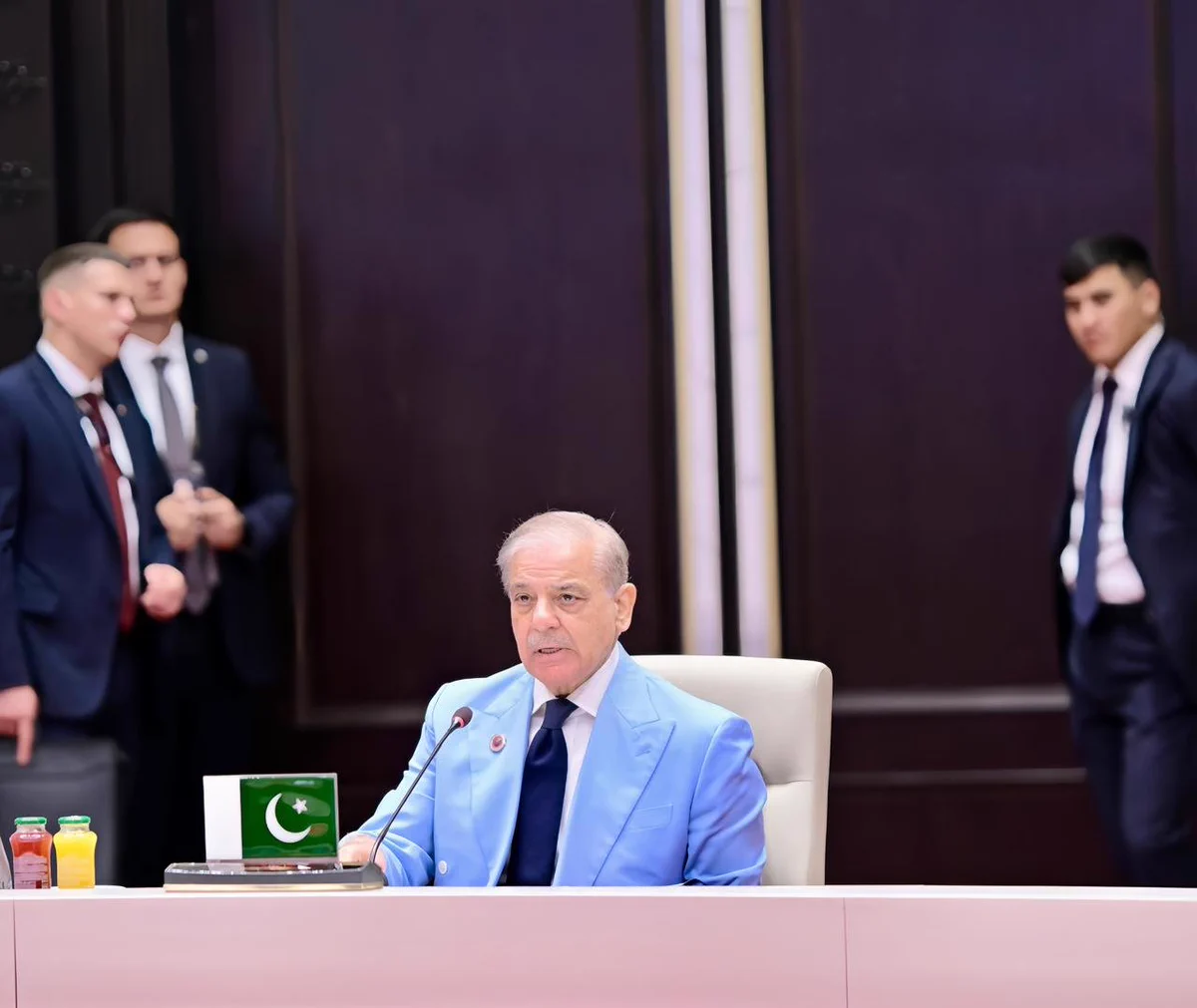
BISHKEK: Prime Minister Shehbaz Sharif has warned that water must never be used as a political weapon or an instrument of coercion, calling it the “lifeblood” of the region that sustains millions of people and secures the future of coming generations.
Addressing the SCO Plus Format meeting in Bishkek, the prime minister stressed that agreements governing shared water resources were binding commitments that must be honoured unconditionally.
“Water is the lifeblood of our region that sustains millions of lives, nourishes our lands and secures the very future of our coming generations. It must never be weaponised or used for political coercion,” Shehbaz said.
His remarks came a day after the Permanent Court of Arbitration ruled that the 1960 Indus Waters Treaty (IWT) remains in force and ordered India to limit ongoing hydroelectric construction in Kashmir.
The SCO Plus meeting was held under the theme, “The UN as a Key Element of the Just World Order: The Contribution of the SCO Plus States to the Formation of a Multipolar World.” It was chaired by Kyrgyz President Sadyr Zhaparov, whose country holds the SCO’s rotating presidency for 2025–26.
Pakistan highlights peace efforts
Shehbaz said Pakistan had actively contributed to global peacemaking during its two-year tenure as a non-permanent member of the UN Security Council.
He described the signing of the Islamabad Memorandum of Understanding as the culmination of Pakistan’s peace efforts, calling it a viable pathway toward ending the ongoing Gulf conflict through dialogue and diplomacy.
The prime minister also highlighted the Makkah Joint Defence Agreement between Pakistan, Saudi Arabia and Türkiye, saying the agreement had strengthened prospects for regional peace by demonstrating unity and a shared commitment to security.
Call for UN reform
Speaking about the international order, Shehbaz said the United Nations, established 80 years ago, had played an important role in addressing global challenges including poverty, hunger, disease and environmental threats.
However, he argued that the organisation urgently needs reform.
“Today, the UN is urgently in need of reform. It must become more accountable and responsive.”
He said the emergence of a multipolar world should be viewed as an opportunity to build a more equitable, democratic and just international system.
Gaza and terrorism
The prime minister also expressed deep concern over the situation in Gaza and the West Bank, urging the international community to act decisively to end the suffering of Palestinians and uphold their right to self-determination.
Turning to regional security, Shehbaz described terrorism as a common threat and reaffirmed Pakistan’s commitment to the Regional Anti-Terrorism Structure (RATS) of the SCO.
He said Pakistan had lost more than 90,000 lives and suffered $150 billion in economic losses while fighting terrorism.
Calling for terrorism in all its forms, including what he termed state terrorism, to be condemned, Shehbaz said lasting regional connectivity would remain difficult without peace and stability in Afghanistan.
He also called for an end to terrorist groups using Afghan territory to launch attacks against Pakistan and other neighbouring countries.
As Pakistan assumes the SCO chairmanship, Shehbaz said Islamabad would be guided by the conviction that the organisation must deliver tangible benefits to its people.

