

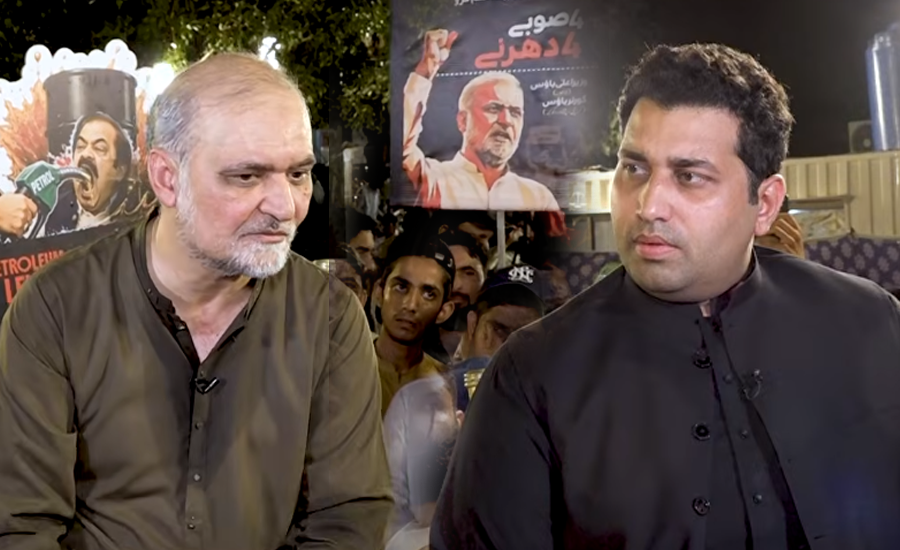
LAHORE: Jamaat-i-Islami (JI) chief Hafiz Naeemur Rehman has warned that his party could march towards Islamabad if the government fails to accept its demands, saying the people must step out of their “comfort zones” to fight for their rights.
Speaking in an exclusive interview with Farrukh Warraich, Mr Rehman said the government had compounded public hardship by subjecting people to prolonged power outages during the intense summer heat.
He said JI was continuing its protest campaign in a different and more public-oriented manner, with activities including street theatre, karate shows and cricket matches.
“The political opposition has its place, but Jamaat-i-Islami has come out not for any particular political leader, but for the rights of the people,” he said.
Mr Rehman alleged that some political and social circles were suffering from a “fear of missing out” (FOMO), which, he claimed, had led them to support the government’s narrative rather than JI’s position.
Criticism of petroleum levy
The JI chief also criticised the petroleum levy, saying the money should have been used for establishing and developing oil refineries instead of being treated primarily as a source of government revenue.
He alleged that even during the war, locally produced oil was sold at prices linked to imported fuel. In such circumstances, he said, the government should have reduced or abolished the levy and taxes rather than increasing them.
Referring to past government measures, Mr Rehman said the administration of former prime minister Mohammad Khan Junejo had imposed restrictions on 1,000cc vehicles, arguing that similar measures could be introduced today.
He said the government initially underestimated JI’s protest campaign and considered it easy to contain.
‘Same political system’
Mr Rehman also criticised the country’s major political parties, saying there was no fundamental difference between the Muttahida Qaumi Movement (MQM), Pakistan Peoples Party (PPP) and Pakistan Muslim League-Nawaz (PML-N), as all three were part of the same political system.
He added that a section of the opposition also appeared to have been compromised.
The JI chief maintained that his party’s campaign was focused on issues affecting ordinary citizens, particularly the rising burden of electricity and fuel costs, rather than on supporting or opposing any individual political leader.

