

By Ayaz Khan Lohani
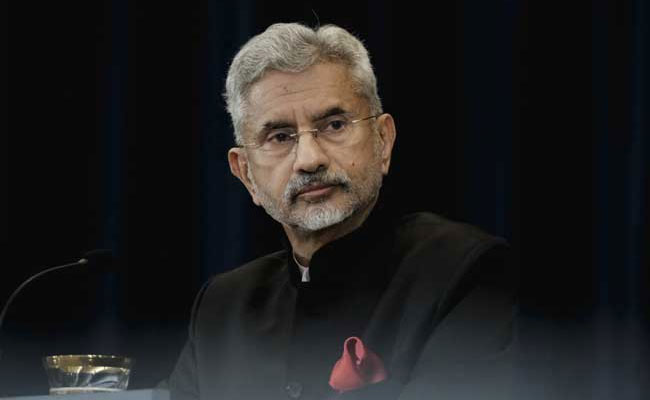
Sometimes, a diplomat’s evasion can be more revealing than his answer. That was particularly evident when India’s External Affairs Minister S. Jaishankar appeared at the ET World Leaders Forum 2026 in New Delhi, held on August 21–22.
The interview covered India’s strategy in an increasingly unstable world, but one exchange stood out: the discussion about the Mecca Joint Defence Agreement between Pakistan, Saudi Arabia and Türkiye, signed on August 7.
The interviewer raised Pakistan’s growing profile in West Asia and asked Jaishankar how India viewed the new defence arrangement. Rather than directly assessing the pact, Jaishankar immediately shifted the focus to India’s own strategic interests—its large diaspora in the Gulf, energy requirements, shipping interests and relationships with Israel, Iran, Saudi Arabia and the United States.
All of these factors are legitimate. But they did not answer the central question: Does the Mecca pact concern India?
The interviewer pressed him further, asking whether the agreement represented a “clear and present” concern for New Delhi.
Again, Jaishankar avoided a direct answer.
Instead, he questioned the practical value of the pact itself. His pointed response was: “There are live military situations which each of the signatories faces. What has the Mecca pact done in response to that?”
That was a clever diplomatic counterattack. Rather than acknowledge the pact as a strategic development, Jaishankar challenged its credibility and effectiveness.
When the interviewer observed that Jaishankar had essentially answered his own question, the minister responded with a knowing remark, saying the interviewer had “reflected” before giving the answer.
The exchange was revealing.
Jaishankar never said India was unworried. Nor did he openly describe the pact as a threat. Instead, he repeatedly emphasized that “everything counts” in India’s strategic calculations, particularly developments involving countries that are not well disposed towards New Delhi.
This is where the interview becomes politically significant.
The Mecca pact brings together Pakistan, Saudi Arabia and Türkiye at a moment when the strategic architecture of West Asia is undergoing major change. For Pakistan, it potentially elevates its role from a South Asian military power to a more consequential player in Gulf security. For Saudi Arabia and Türkiye, it creates another layer in their evolving security partnerships.
For India, that presents a complicated challenge. New Delhi has invested heavily in its relations with Saudi Arabia and the Gulf while simultaneously maintaining important ties with Israel, Iran and the United States.
Jaishankar’s response therefore should not be simplistically labelled as “frustration.” But there was unmistakable strategic discomfort beneath his diplomatic restraint.
The striking contrast was that Jaishankar spoke confidently about India’s ability to manage China, Russia, Ukraine and the United States. Yet when confronted with the Pakistan-Saudi-Türkiye defence pact, his response became noticeably guarded, indirect and even slightly sarcastic.
Perhaps that was the most revealing part of the exchange.
India may not want to publicly acknowledge the Mecca pact as a major strategic setback—but Jaishankar’s careful avoidance suggested that New Delhi is taking the development seriously

