

Lahore Mirror- US President Donald Trump has accused Iran of waging war against the United States since 1979, claiming Tehran is responsible for the deaths of thousands of American service members. Trump makes such claims at a time when the financial cost of the US military campaign against Iran has reportedly exceeded $47 billion.
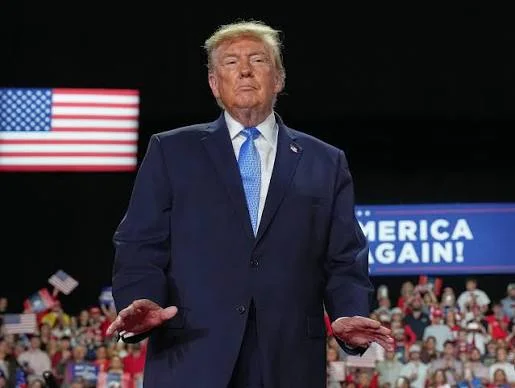
Speaking at a rally in Texas, Trump said Washington had not started the war, arguing that Iran had been fighting the United States for decades.
He also criticized previous US administrations, saying earlier leaders should have taken action against Tehran but lacked the courage or judgment to do so.
Trump further claimed that oil shipments through the Strait of Hormuz were increasing and suggested that the strategic waterway could soon be renamed the “Strait of Trump.”
US War Spending Exceeds $47 Billion
According to Reuters, citing Pentagon data obtained by the news agency, the US military has spent more than $47 billion on the war against Iran. The latest estimate is more than 25% higher than the $37.5 billion figure provided by Defense Secretary Pete Hegseth in July.
The Pentagon has not publicly released the latest estimate and did not immediately respond to Reuters’ request for comment.
More than $29 billion is projected to be needed to replenish ammunition and missiles used during the conflict. A further $6 billion or more would be required to replace military equipment and platform losses, including aircraft and numerous drones.
The estimates cover a range of operational expenses, including flight operations and cyber support. However, they do not clearly account for the potentially substantial costs of repairing US military bases damaged by Iranian missile and drone attacks.
Conflict Raises Political and Economic Pressure
The rising cost of the war comes as Trump’s Republican Party faces political pressure ahead of the November 3 congressional elections. Republicans hold narrow majorities in both chambers of Congress, and the conflict’s impact on global energy prices has weighed on support for Republican candidates and hurt Trump’s approval ratings, according to Reuters.
Trump launched the military campaign jointly with Israel in February, initially predicting that the conflict would be short.
The US military’s early strategy focused on using expensive, high-end precision missiles to weaken Iran’s air defences before shifting to less costly weapons, including Joint Direct Attack Munition (JDAM) bombs.
However, an April ceasefire gave Iran time to recover underground storage facilities and restore some air defences, missiles and drones that had been inaccessible during the fighting.
Trump subsequently imposed a naval blockade on Iran aimed at cutting off oil export revenue. He has also left open the possibility of resuming combat operations after the midterm elections.
US officials, speaking anonymously to Reuters, said the Pentagon had been planning for a possible return to heavy fighting if ordered to do so.
The growing financial burden, combined with pressure on global energy markets, adds another challenge for the Trump administration as it weighs its military objectives against the domestic political consequences of a prolonged conflict.

