

Lahore Mirror: There are movies that entertain you for two hours, and then there are movies that quietly dismantle the way you look at your own existence. The Slightest Touch, the newly released HBO adventure-documentary directed by Rachel Fleit, belongs firmly in the latter category.
Ostensibly, the film is about a marathon. It chronicles Irish actor Colin Farrell running the Dublin Marathon and pushing his longtime friend, Emma Fogarty, across the finish line. But underneath the sweat, the sneakers, and the roaring crowds lies a masterclass in human resilience, radical empathy, and a searing question directed straight at the audience: What are you doing with the breath you’ve been given?
The Fragility of a “Slight Touch”
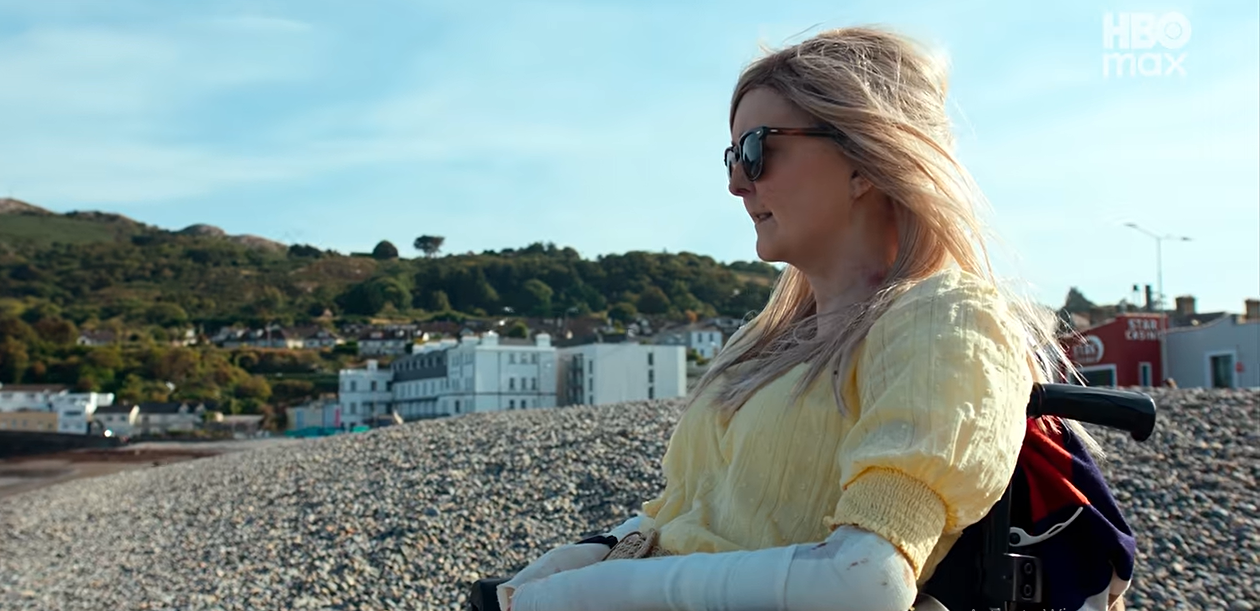
To understand the emotional weight of the documentary, you have to understand Emma Fogarty. Born with Epidermolysis Bullosa (EB), a brutal genetic condition that leaves her skin as fragile as a butterfly’s wing, Emma lives in a state of constant, unimaginable pain. For her, the slightest touch doesn’t bring comfort—it brings blisters and tears. When she was born, doctors told her parents she wouldn’t survive her first week.
She just celebrated her 40th birthday.
Watching Emma endure her grueling daily medical care on screen is a transformative experience for the viewer. It immediately recalibrates your definition of a “bad day.” The trivial anxieties that consume our modern lives—traffic, work stress, minor inconveniences—suddenly evaporate when contrasted with a woman who fights for the simple right to exist without breaking apart.
A Friendship Without the Hollywood Gloss
What keeps The Slightest Touch from feeling like manipulative, sentimental “inspiration porn” is the raw, unscripted bond between Fogarty and Farrell. There is no Hollywood pretense here. Farrell isn’t acting the part of the benevolent celebrity savior; he is a man fiercely devoted to a friend he deeply respects.
The documentary thrives in its quietest moments: the organic banter, the shared jokes, and the profound mutual vulnerability. Farrell opens up about his own experiences with caregiving and grief, while Fogarty shares the terrifying reality of outliving her prognosis while watching friends with the same condition pass away. Their chemistry reminds us of what true connection looks like in an increasingly disconnected world.
The Final 4 Kilometers
The emotional climax of the film—Farrell pushing Emma’s wheelchair for the final 4 kilometers of the Dublin Marathon, one for each decade of her survival—is impossible to watch with dry eyes. As they cross the line, having raised nearly a million euros for EB research, it becomes clear that this wasn’t just a race against distance. It was a defiant, triumphant middle finger to a terminal diagnosis.
When the credits roll on The Slightest Touch, you aren’t just thinking about Colin or Emma. You are forced to look inward. You look at your own health, your own relationships, and the time you have left. It is a cinematic mirror that asks us to stop sleepwalking through our lives and start appreciating the profound beauty of every unblistered step we take.

