

By Julia El-Haj
For much of modern history, the Global South has been treated less like a community of nations than a map of permissions.
Permission to trade. Permission to develop. Permission to choose allies. Permission to build an economy that does not conform to somebody else’s design. Even the right to make mistakes has been distributed unequally. Powerful states can fail spectacularly and call it policy. Smaller states fail, and their failure becomes an argument for external management.
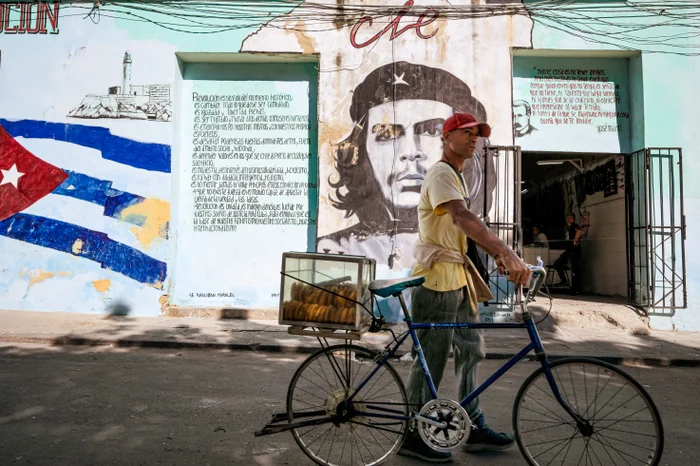
That is why Cuba matters far beyond Cuba.
A country does not have to be flawless to possess the right to determine its own future. Sovereignty is not a prize for good behaviour. If self-determination belongs only to nations powerful enough to resist punishment, it is not a principle. It is a privilege.
There is an old political trick worth recognising. Constrict access to markets, credit, fuel and investment, then photograph the exhaustion and present it as proof that the society itself is incapable. Over time, the pressure disappears from the story. Only the suffering remains visible.
Something larger is moving beneath this argument. In 2025, 165 countries at the United Nations voted for an end to the U.S. embargo on Cuba. Cuba is now a BRICS partner, part of a widening South-South architecture seeking more room for trade and political independence. This week, Washington tightened Cuba-related sanctions again. Much of the world is asking for greater autonomy while the machinery of coercion keeps reaching for the past.
The Global South is not becoming a single bloc, nor should it. Its countries disagree profoundly. Independence does not require ideological uniformity. It requires enough space to disagree without being economically suffocated for doing so.
The tide is shifting not simply from West to East, but away from the idea that one centre of power should decide the acceptable limits of everyone else’s future.
Nations once spoken about are increasingly speaking to one another. Countries long called peripheral are remembering what the old vocabulary concealed: together, they constitute much of humanity.
The future should not be another empire with a different flag. It should be a world with more centres of gravity, more routes for cooperation, and more room for nations to breathe.
Let Cuba determine Cuba. Let African, Latin American, Caribbean, Asian and Middle Eastern societies author more of their own futures.
A freer world begins when power understands that other peoples were never asking to be managed. They were asking for enough air to become themselves
Julia El-Haj is a global health strategist and founder of Hermetica Health. Her writing explores the intersection of human systems, public health, conflict, and cooperation, examining how narratives, institutions, and power structures shape human wellbeing and global resilience

