

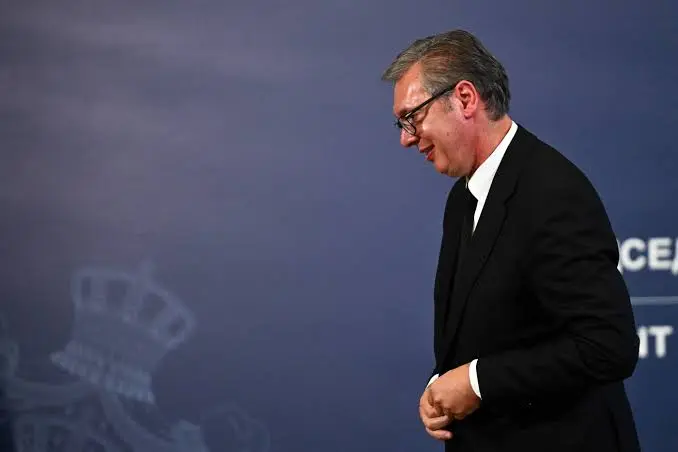
BELGRADE: Serbian President Aleksandar Vucic resigned on Sunday, ending his second and final term as president and paving the way for him to seek the post of prime minister in the country’s October 25 parliamentary election.
Vucic announced his resignation from the presidential palace in Belgrade. He told supporters that he was stepping down and that he would hand his duties to Parliament Speaker Ana Brnabic.
“This is the last evening for me in this building,” Vucic told supporters gathered outside the presidency. He also said he had served Serbia with what he described as honor and honesty.
Vucic Moves Toward Prime Minister’s Office
Vucic cannot seek a third presidential term under Serbia’s Constitution. His second five-year term was due to end in May 2027.
His resignation comes ahead of the October 25 snap parliamentary election. If his Serbian Progressive Party (SNS) forms the next government, Vucic could become prime minister.
The prime minister holds greater formal executive powers in Serbia than the president. Vucic has already served as both prime minister and president and has remained a central figure in Serbian politics for more than a decade.
Under the Constitution, Parliament Speaker Ana Brnabic will serve as acting president until a new head of state is elected. The presidential election must take place within 90 days.
Protests Put Pressure on Government
Vucic’s resignation comes after nearly two years of student-led protests and political tensions.
The protests began after a railway station canopy collapsed in the northern city of Novi Sad in November 2024, killing 16 people. Students and opposition groups demanded accountability, greater transparency and action against corruption.
The demonstrations have developed into a wider political movement. A student-backed group known as “Students Win” has entered the parliamentary contest, while other opposition parties have also mobilized ahead of the vote.
Vucic’s government has faced allegations of corruption and authoritarian practices from opponents and rights groups. Serbian authorities have rejected such accusations.
Serbia Between EU and Russia
Vucic has also faced the challenge of balancing Serbia’s push for European Union membership with its long-standing ties with Russia.
Serbia remains an EU candidate country while maintaining close relations with Moscow. The government has also sought to manage relations with other major powers, including China.
Vucic has dominated Serbian politics since the Serbian Progressive Party came to power in 2012. He served as prime minister before becoming president in 2017.
What Happens Next?
With Vucic’s resignation, Brnabic will temporarily assume the presidency until Serbia holds a new presidential election.
The parliamentary election is scheduled for October 25. Vucic is expected to lead the SNS campaign as it seeks to form the next government.
The election will take place amid continuing student protests and a broader political debate over corruption, government accountability and Serbia’s future direction.
Vucic’s move from the presidency to a possible prime ministerial role means that his political future will now be closely tied to the outcome of the October parliamentary vote.

