

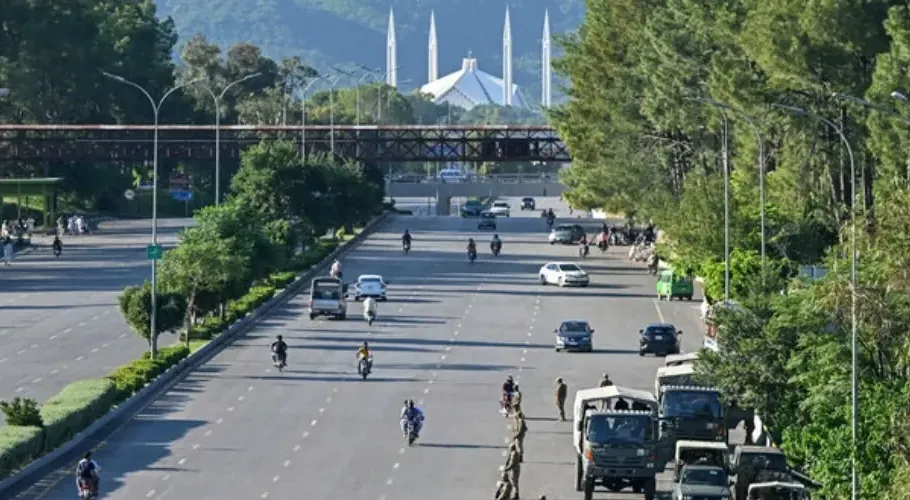
ISLAMABAD (LAHORE MIRROR) — A proposal to establish a separate assembly and elected government for Islamabad has reached Prime Minister Shehbaz Sharif, with a high-level committee recommending major changes to the capital’s administrative structure.
The proposed Islamabad Capital Territory (ICT) Assembly would be created through an Act of Parliament, according to sources familiar with the draft prepared by a committee headed by Federal Minister for Planning Ahsan Iqbal.
The proposal envisages a 27-member assembly, comprising 21 directly elected members, five reserved seats for women and one seat for minorities.
Under the proposed arrangement, residents of Islamabad would directly elect members of the assembly. The draft also recommends allocating seven assembly seats from each National Assembly constituency in the capital.
The proposed legislation seeks to give the capital its own legislature, chief executive and 27 administrative departments, while bringing sectors such as health, education, environment and civic services under the elected local government.
However, key matters including law and order and Islamabad’s master planning would remain under federal control.
The draft proposes placing most other administrative functions under the elected ICT government, giving it administrative and financial autonomy similar to that enjoyed by a province.
It also seeks to bring Islamabad’s fragmented administrative system under a unified structure and reorganise the functions of several institutions, including the Capital Development Authority (CDA).
Under the proposal, all powers and functions of the CDA would be transferred to the ICT government, while responsibilities of other institutions would be reassigned under the Local Government Act, 2015.
The proposed administrative setup includes a chief secretary and four secretaries, who would oversee different groups of departments.
The draft further proposes that the ICT government formulate its own rules of business. Articles 62 and 63 of the Constitution, which set qualifications and disqualifications for lawmakers, would apply to members of the proposed assembly.
The Election Commission of Pakistan would conduct elections to the new assembly. The chief executive could be designated either as a mayor or chief minister and would remain accountable to the elected assembly.
Federal institutions operating in Islamabad would continue to function, while institutions serving the wider country would retain their existing roles in the capital.
The proposal also calls for unified legislation governing Islamabad’s new administrative structure and amendments to the CDA Ordinance, 1960.
According to sources, the proposal will require approval from the federal cabinet before legislation can be introduced in Parliament. Following cabinet approval, the bill would be placed before both the Senate and the National Assembly.
The special committee that prepared the draft included Tariq Fazal Chaudhry, Musadik Masood Malik, Rana Sanaullah, Talal Chaudhry, both National Assembly members from Islamabad and the interior secretary.

