

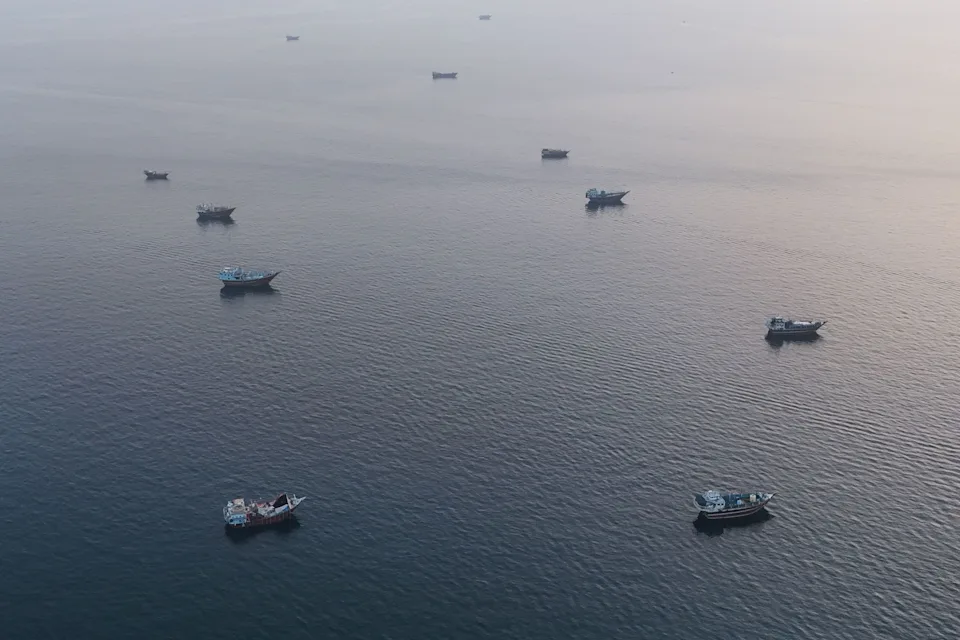
TEHRAN: Iran’s Islamic Revolutionary Guard Corps (IRGC) has said the Strait of Hormuz will remain closed unless the United States accepts Tehran’s conditions and returns to compliance with a peace memorandum agreed between the two sides in June.
IRGC spokesperson Hossein Mohebbi said Wednesday that Iran remained in control of the strategic waterway and that no vessel could pass through it without Iranian permission and management.
“All enemy warships are at least 400 kilometres away from the Strait of Hormuz,” Mohebbi said, adding that Iran also maintained control over the route near Oman.
He said Tehran and Muscat had reached understandings regarding their respective shares in the strait and its revenues, while blaming US “obstructionism” for delays in negotiations.
“If the United States returns to compliance with the peace memorandum of understanding signed with Iran, we can open the Strait of Hormuz within the agreed framework,” Mohebbi said.
“But if the United States does not accept our conditions, the Strait of Hormuz will not be opened under any circumstances.”
His remarks came a day after Iran and Oman announced discussions on a phased framework that includes the creation of a temporary joint shipping corridor and a joint demining project.
The two countries said technical negotiations would continue towards establishing a permanent shipping route and determining future arrangements for traffic management, information-sharing, navigation and security services.
The dispute over one of the world’s most strategically important waterways comes amid escalating tensions between Tehran and Washington, involving economic pressure, diplomatic negotiations and the threat of further military confrontation.
Meanwhile, Iranian Foreign Minister Abbas Araghchi has called on the United Nations to condemn what he described as Washington’s campaign of “economic terrorism” against Iran.
In a letter to UN Secretary-General Antonio Guterres and member states, Araghchi accused the US of attempting to disrupt Iran’s economic relations through secondary sanctions and threats of exclusion from the American financial system.
Iranian President Masoud Pezeshkian also said Washington would fail to achieve its objectives through economic pressure, insisting that Tehran would continue to pursue negotiations while resisting what it considers coercive measures.
US President Donald Trump, however, said he was “not in a hurry” for Iran to return to the negotiating table, saying he had “no time schedule” for talks to resume.
The standoff leaves the future of the Strait of Hormuz — a critical global energy and shipping route — increasingly tied to whether Washington and Tehran can bridge their widening political and economic differences.

