

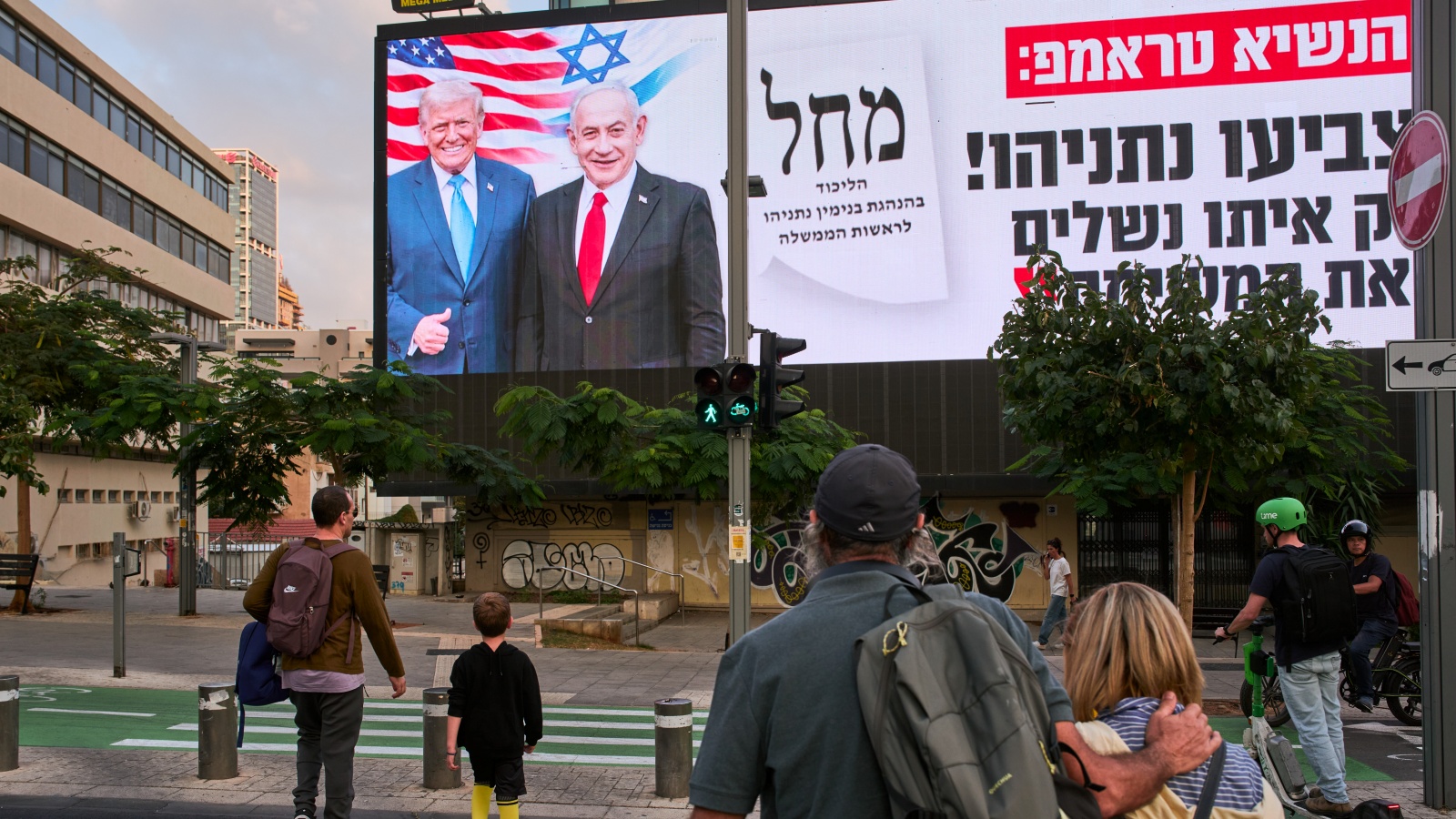
The parliamentary election, the first since the Israeli’s war against Gaza in October 2023, is widely seen as a referendum on Netanyahu’s leadership, his government’s handling of the Gaza war and its broader security and political policies.
More than 7.3 million eligible voters are expected to cast their ballots in a country deeply divided over its leadership, the future of the Palestinians and Israel’s place in an increasingly critical international environment.
While Netanyahu is fighting to retain power, opposition parties are seeking to capitalize on public anger over security failures, the prolonged conflict and the government’s controversial policies.
Gaza War and West Bank Violence Dominate Election
The election comes amid the devastating consequences of Israel’s military campaign in Gaza, where more than 74,000 Palestinians have been killed, according to figures attributed to the territory’s health ministry.
The vast majority of those killed are reported to be women and children.
Humanitarian agencies have repeatedly warned of severe food shortages, mass displacement and the collapse of essential services. Restrictions on humanitarian assistance have intensified concerns over famine and starvation among Gaza’s civilian population.
The conflict has also fueled violence in the occupied West Bank, where settlement expansion, attacks by extremist settlers and Israeli military operations have drawn widespread international condemnation.
For many Palestinians and international observers, the election represents a test of whether Israeli voters will support the continuation of these policies or demand a change in direction.
Netanyahu Faces a Tough Electoral Challenge
Netanyahu is facing a formidable challenge from former military chief Gadi Eisenkot, whose centrist-right Yashar party has emerged as a major contender.
The prime minister’s political standing has been weakened by criticism over the October 7 security failures, the prolonged war in Gaza and allegations of corruption.
However, Netanyahu continues to enjoy support among voters who view him as a strong leader capable of confronting Israel’s security threats.
The opposition, meanwhile, is campaigning on promises of political change, improved governance and a reassessment of the government’s strategic failures.
Pre-election polling suggests a closely contested race, with neither political camp assured of the 61 seats needed to form a majority government in the 120-member Knesset.
Arab Parties Could Hold the Balance of Power
The election could ultimately hinge on the performance of two Arab-led parties, Ra’am and the Joint List, whose seats may determine whether the opposition can unseat Netanyahu.
Arab citizens make up approximately 21% of Israel’s population, with around 2.1 million people. Their political interests have increasingly been represented by Ra’am and the Joint List, both of which have played a more prominent role in Israeli politics in recent years.
Ra’am made history following the 2021 election when its leader, Mansour Abbas, joined a coalition led by opposition figures Naftali Bennett and Yair Lapid to remove Netanyahu from power.
The move made Ra’am the first independent Arab party to join an Israeli governing coalition.
Some pre-election polls suggest the two Arab-led parties could collectively win as many as 15 seats. Even if their final tally falls short of that projection, they could still hold the balance of power in a deeply divided parliament where neither the Netanyahu camp nor the opposition can secure a majority on its own.
However, the prospect of Arab parties playing a decisive role in government formation remains politically contentious.
An anti-Netanyahu coalition would bring together parties spanning a broad ideological spectrum, from the hawkish Yisrael Beiteinu to the left-wing Democrats.
Although a similar coalition succeeded in removing Netanyahu from office in 2021, the political atmosphere following the October 7 attacks has made cooperation with Arab parties more difficult.
Several opposition leaders have ruled out including Arab parties in a future government.
Among them is Gadi Eisenkot, the former Israeli military chief whose Yashar party is projected to emerge as one of the largest parties in the Knesset.
This creates a major dilemma for the opposition: Arab parties could provide the parliamentary numbers needed to remove Netanyahu, but some of the opposition’s leading figures remain unwilling to share power with them.
A Minority Government Could Offer an Alternative
One possible solution would be for the opposition to form a minority government while relying on Arab parties for support from outside the coalition.
Such an arrangement would allow Arab parties to help sustain a government without formally joining it.
There is historical precedent for this approach.
In the 1990s, Yitzhak Rabin relied on support from Arab parties outside his governing coalition to keep his administration functioning and advance legislation.
A similar arrangement could offer the opposition a way to overcome its political differences and prevent Netanyahu from remaining in power.
However, a minority government would likely face significant challenges in passing legislation and maintaining stability.
The opposition may therefore be forced to choose between two politically difficult options: cooperate with Arab parties to remove Netanyahu or risk parliamentary deadlock and another election.
The second scenario could benefit Netanyahu, an experienced political survivor who has repeatedly returned to power despite major political setbacks.
Coalition Politics Could Decide Netanyahu’s Fate
Pre-election polling suggests Netanyahu’s hard-right coalition is trailing the opposition, although the final outcome remains uncertain.
Even if Likud loses seats, the fragmented political landscape could make it difficult for opposition parties to assemble a stable governing majority.
The far-right factions led by Itamar Ben-Gvir and Bezalel Smotrich remain influential potential coalition partners. Their demands for settlement expansion, annexation and tougher policies toward Palestinians could complicate negotiations over the formation of a new government.
The election could therefore produce a prolonged political deadlock, particularly if neither side secures enough support to form a coalition.
Would Netanyahu’s Defeat Change Israel’s Gaza Policy?
One of the biggest questions surrounding the election is whether a change in leadership would lead to a fundamental shift in Israel’s policies toward Palestinians.
Although opposition parties have criticized Netanyahu’s handling of the war and the security failures preceding the October 7 attacks, many mainstream Israeli political groups remain opposed to Palestinian statehood or reluctant to support a two-state solution.
A new government could seek to improve relations with Western allies, reconsider aspects of the Gaza strategy and pursue diplomatic initiatives.
However, a dramatic reversal on Palestinian sovereignty appears unlikely, given the political positions of major opposition parties.
The election could therefore bring a change in leadership without resolving the underlying conflict.
Far-Right Politics Continue to Gain Influence
The growing influence of far-right factions remains one of the most significant developments in Israeli politics.
Figures such as Ben-Gvir and Smotrich have advocated stronger Israeli control over the occupied West Bank, expanded settlements and policies that could undermine prospects for Palestinian statehood.
Their political influence has helped normalize increasingly hardline positions within Israel’s governing debate.
Even if Netanyahu loses power, the nationalist shift in Israeli politics could persist, limiting the scope for a fundamental change in policy toward Palestinians.
International Pressure and Israel’s Global Standing
The election is also being closely watched by governments and political leaders around the world.
Israel has faced mounting diplomatic pressure over the humanitarian crisis in Gaza, the scale of destruction and its military operations in the occupied Palestinian territories.
A Netanyahu victory could signal continued political support for his government’s approach, potentially deepening tensions with Western allies and international institutions.
An opposition victory could create an opportunity for diplomatic engagement and a possible improvement in relations with some international partners.
Yet a change of government would not automatically resolve the broader dispute over Palestinian rights, occupation and statehood.
Conclusion: A Political Verdict With Far-Reaching Consequences
Israel’s October 27 election is more than a contest between Netanyahu and his opponents. It is a defining political moment for a country grappling with the consequences of the October 7 attacks, the devastating Gaza war and deepening domestic divisions.
The outcome could determine whether Netanyahu remains in power or Israel enters a new political chapter.
But the decisive factor may not be which party wins the most seats. It could be whether the opposition can overcome its internal divisions and agree on a governing arrangement that includes, or relies on, Arab parties.
For millions of Palestinians and a deeply critical international audience, the vote will be closely watched—not only as a verdict on Netanyahu’s leadership, but also as an indication of whether Israel is prepared to reconsider the policies that have brought it into prolonged conflict and international isolation.

