


LAHORE MIRROR (AP) Two season-ending Formula 1 races in the Middle East are going ahead despite the war in Iran and retaliatory attacks across the region that have canceled or postponed other large sports events. This includes two Formula 1 races earlier this year in Saudi Arabia and Bahrain.
The conflict has upended the region’s image as a safe haven where governments and sponsors have kicked in billions to lure mega-sports events. This comes as Europe and North America appear wary of such lavish spending.
“The situation could change but the geography will not change,” Sebastian Sons, who follows sports in the Middle East with the German research institute CARPO, told The Associated Press. “The Middle East and the Gulf region are always a volatile and fragile region.”
Going ahead is an endorsement for doing business in the region, but has also prompted concerns about safety from some teams and staff. Mohammed Ben Sulayem, the president of auto racing’s world governing body FIA, has said “we are fully prepared” to pull off the two races: Qatar on Nov. 29 and Abu Dhabi on Dec. 6.
Ben Sulayem is from the United Arab Emirates.
A MotoGP race was held in Qatar on Nov. 8 on the track where F1 races. MotoGP is operated by Liberty Media, which also runs F1.
“Holding the races in Qatar and Abu Dhabi signals that those two are stable and able to host large-scale sporting events. It is important they are seen to be open for business,” Kristian Ulrichsen, a political scientist at Rice University’s Baker Institute, told The AP.
“Predictability in long-term decision-making and policy planning,” Ulrichsen added, “made the region so attractive as a host of mega-events at a time when many cities and countries around the world are rethinking the cost of doing so.”
Qatar bids for the 2036 Olympics
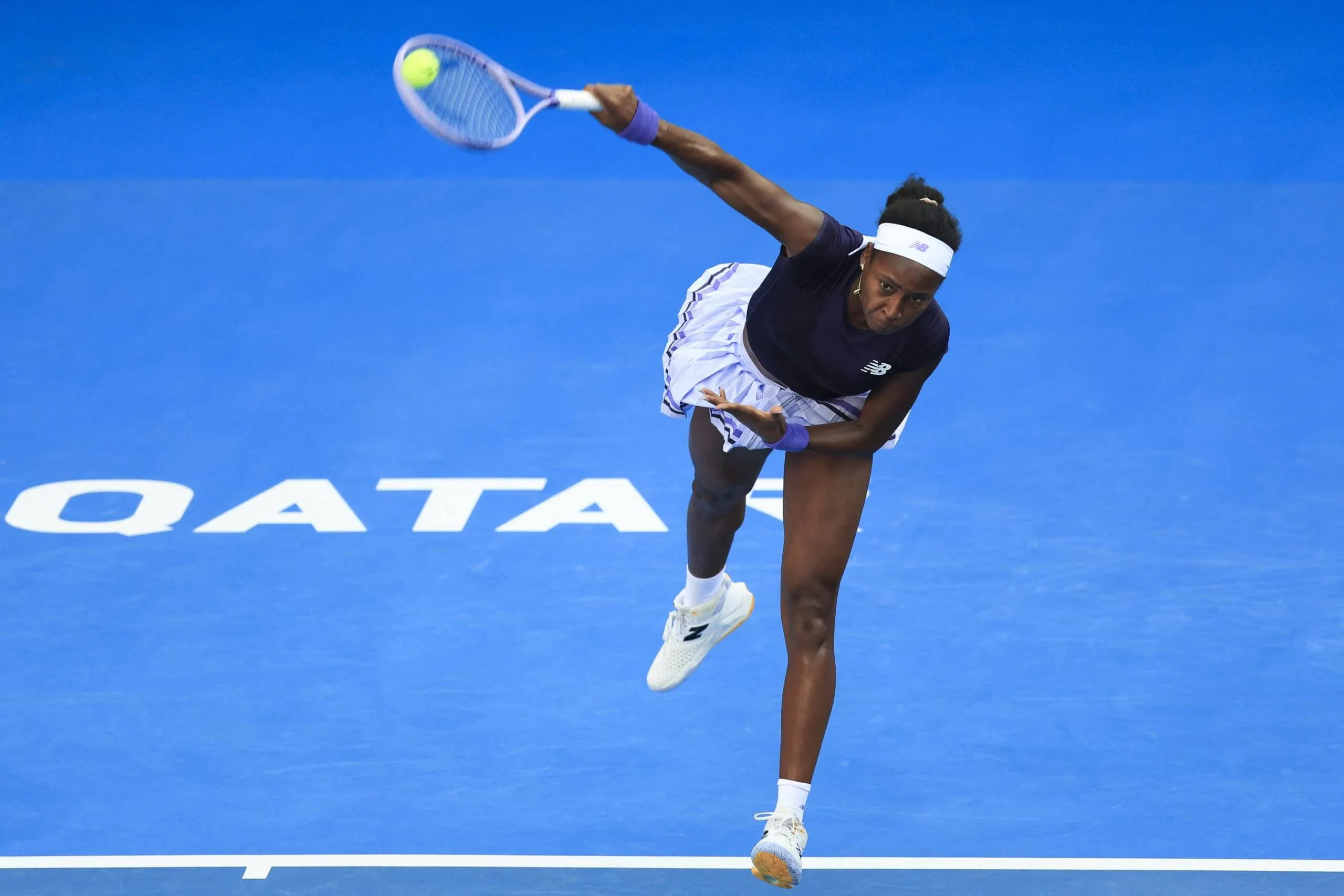
Qatar’s reputation is on the line. It held the 2022 World Cup and is a co-favorite — with India — to land the 2036 Olympics. It’s also host next year to the basketball World Cup (Aug. 27-Sept. 12) and has the 2030 Asian Games.
It took a hit last week when the United States pulled its team from the boys’ under-17 World Cup being played in Qatar.
Saudi Arabia and its Persian Gulf neighbors have spent big to hold major sports events but were cutting back on mega-sports funding before the war began nine months ago.
“For Saudi, the war has accelerated the need to find economies, to maybe reassess what was feasible and what wasn’t,” Ulrichsen said. He said landing the “big prize,” two years ago — the 2034 World Cup — probably honed Saudi’s focus.
“Qatar and the UAE will probably have to at some point do the same,” he added.
Major events called off, postponed or relocated include the two Formula 1 races earlier in the season, and the WTA season-ending tennis finals and soccer’s monthlong Asian Cup — both originally scheduled for Saudi Arabia. The 2027 Dakar Rally was also moved from Saudi Arabia to Portugal and Morocco.
Soft power meets hard power
The region has been using sports to promote “soft power” to enhance its brand. But Saudi Arabia now faces hard power with Yemen’s Iran-backed Houthi rebels having struck Saudi Arabia’s main international airport in Riyadh. Riyadh’s business district has also recently been targeted.

