

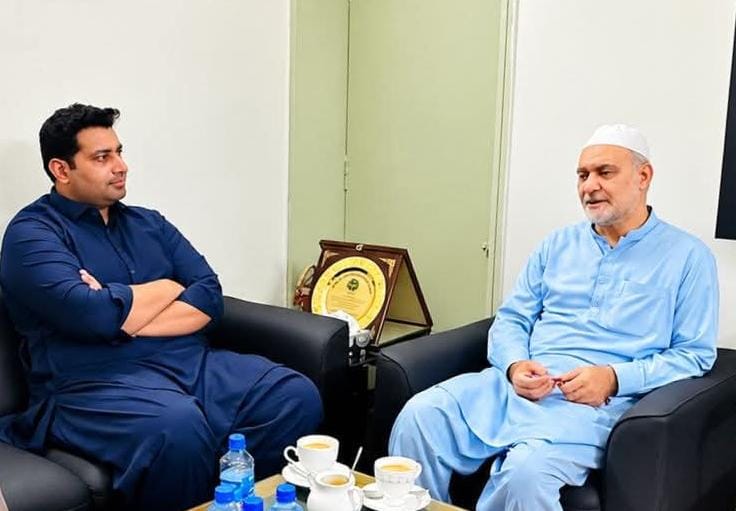
Hafiz Naeem says party will hold a major public gathering in Lahore on Friday, continue its movement until the levy is abolished
LAHORE (Farrukh Warraich) — Jamaat-i-Islami (JI) emir Hafiz Naeemur Rehman has said that his party will continue its campaign for the abolition of the petroleum levy and will not step back until the public demand is accepted.
Hafiz Naeem said while talking to the senior journalist and anchorperson Farrukh Warraich during the meeting at Mansoora Markaz on Multan Road.
The JI emir said Prime Minister Shehbaz Sharif had requested the JI to defer its protest, a request the party had accepted. He said the prime minister would meet a JI delegation after returning to the country.
He said the JI would hold a public gathering in Lahore on Friday against the petroleum levy and what it described as illegal taxes. According to him, the petroleum levy was unconstitutional and amounted to depriving the provinces of their rights.
The JI emir said his party was also raising issues relating to education, agriculture, industry and other public concerns.
Jamaat-i-Islami raises concern on IPPs
Referring to the issue of Independent Power Producers (IPPs), Mr Rehman claimed that the JI’s campaign had helped save Rs4,500 billion for the country. He said the government had confirmed the termination of agreements with 10 IPPs, while matters involving another 21 IPPs had reached the final stage.
According to Mr Rehman, the prime minister had contacted the JI three times before the planned sit-in. He said the party had presented six proposals to the government for economic improvement.
The proposals included bringing the policy rate down to 9 per cent, ending what the JI described as excessive profits by oil refineries and reducing non-developmental expenditure.
The JI chief said peaceful protest in Islamabad was a constitutional right of every political party and assured that the JI’s demonstrations would remain peaceful.
He said the JI would continue its struggle until the people were given what it described as their due rights.

