



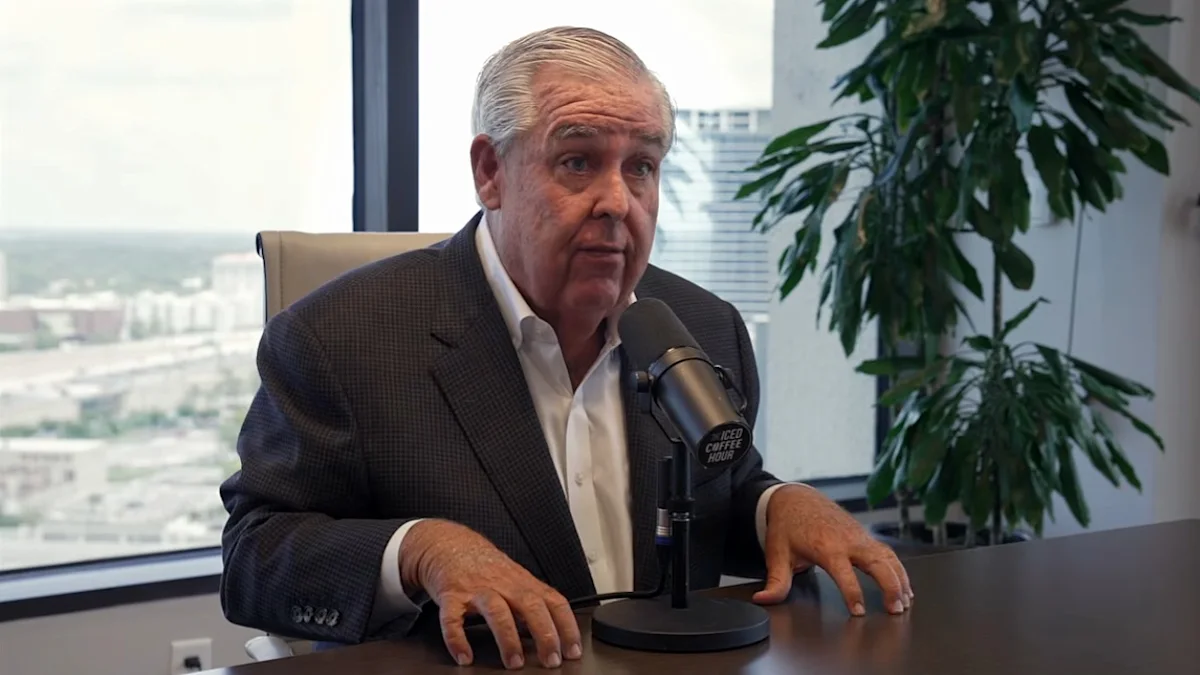

Florida: A US billionaire and prominent attorney has faced a wave of criticism online after describing how he introduced mandatory camera monitoring for employees working remotely.
John Morgan, the Florida-based lawyer and co-founder of Morgan & Morgan, discussed his approach to workplace productivity during an appearance on The Iced Coffee Hour podcast on August 27. Morgan, whose net worth is estimated at around $1.5 billion by Forbes, argued that many people working from home are less committed to their jobs.
During the interview, Morgan recounted how he responded when employees continued working remotely after the COVID-19 pandemic. He said his company allowed staff to work from home but required them to keep cameras on while working.
Morgan said the policy resulted in 23 employees leaving during the first week. He portrayed the departures as evidence that some workers were unwilling to maintain productivity rather than simply preferring remote work.
His comments quickly attracted attention on social media, where users questioned whether constant camera surveillance was an appropriate way to manage employees.
Critics argued that workplace performance should be judged by the quality and results of an employee’s work rather than by whether they remain visible on a camera throughout their shift.
Morgan also described using productivity-monitoring software to track employees’ keystrokes and determine whether they were continuously active during working hours. The remarks intensified criticism of his management philosophy, particularly among workers who view remote employment as a legitimate and productive working arrangement.
One social media user argued that employers should focus on what employees accomplish rather than requiring them to remain at their desks for a fixed number of hours. Another said workers should not feel as though they are being treated like children under constant observation.
The controversy comes amid a broader debate over workplace surveillance as companies increasingly use software to monitor remote employees. Supporters of such tools say they can help employers measure productivity, while opponents warn that excessive monitoring can damage trust and create an intrusive workplace culture.
Research cited by the US Chamber of Commerce has also suggested that working from home can increase employee engagement, although remote workers may face challenges in maintaining a clear separation between their professional and personal lives.
Morgan’s remarks have therefore reignited a familiar question in the post-pandemic workplace: should productivity be measured by constant monitoring, or by the results employees actually deliver.

