

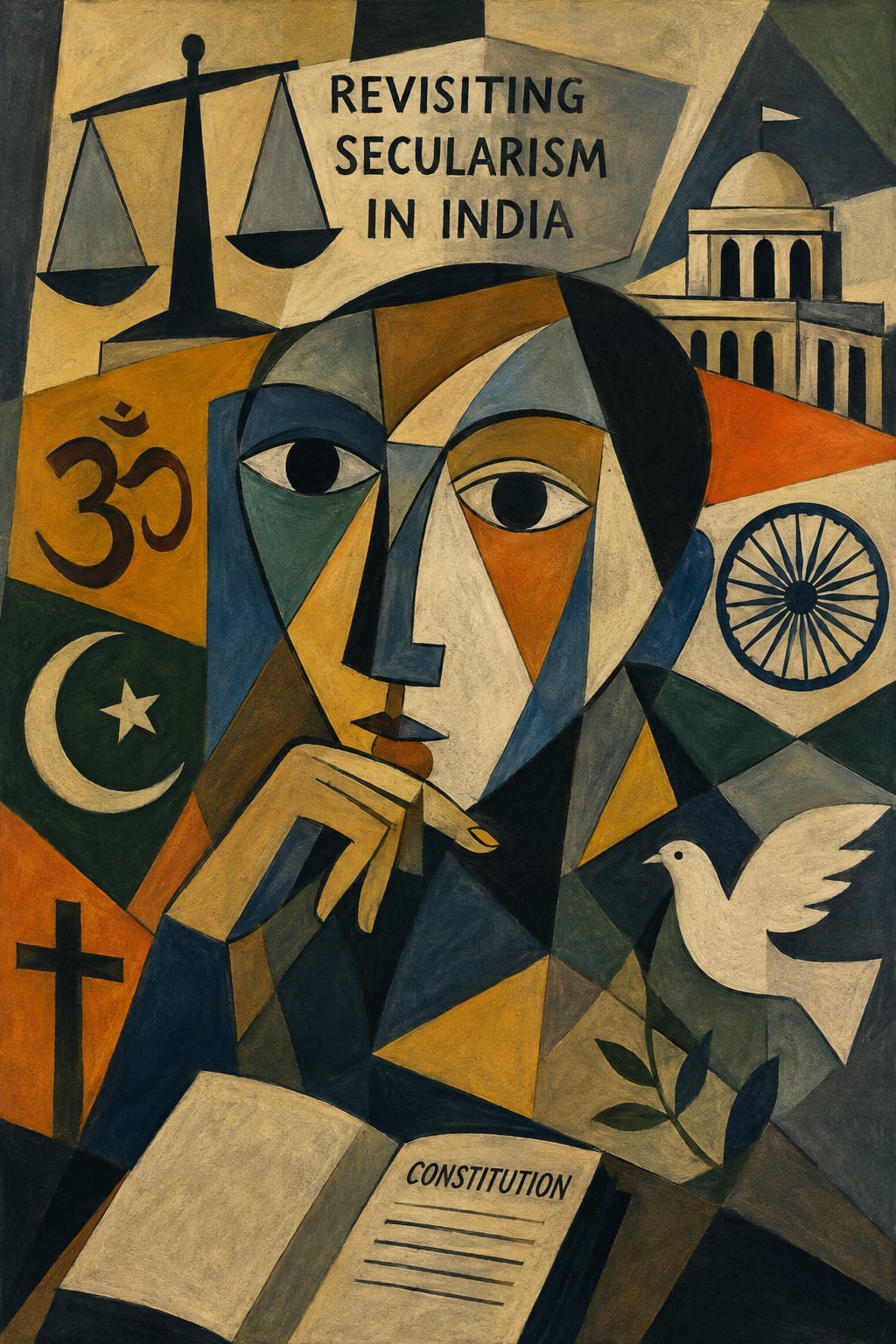
Is India Losing Its Secular Foundation? A Historian on Hindutva, History and Democracy
What happens when a nation built on equal citizenship begins to redefine itself through religious majoritarianism?
As India celebrates its Independence Day, the country is facing a deeper question than political competition: What kind of India is emerging—and what is happening to the secular and constitutional vision on which the republic was built?
In this special JP Global interview, Ayaz Khan Lohani speaks with political historian and scholar Dr. Ishtiaq Ahmed for a wide-ranging conversation on Hindutva, Indian history, democracy, caste, minorities and the legacy of Dr. B.R. Ambedkar.
From the controversy over a Hindu nationalist activist’s proposed visit to Darul Uloom Deoband with Ganga Jal, to the treatment of India’s Muslim minority, the conversation asks whether such episodes are isolated acts of religious expression—or part of a larger political transformation.
Dr. Ahmed also revisits one of India’s most contested historical narratives: the idea that ancient India represented a “golden age,” while centuries of Muslim rule constituted a “dark age.” He argues that the reality was far more complex, shaped by periods of achievement, conflict, coexistence and injustice.
The discussion goes further into Ambedkar’s relationship with Gandhi and the Congress, the caste system, the Shah Bano controversy, the rise of the Hindu right, the rewriting of history, and the growing influence of majoritarian politics.
But this is not simply a conversation about decline. It is also about possibility. Can India’s constitutional ideals withstand the pressures of majoritarian politics? Can its democratic institutions correct course? And is the struggle over the country’s future already underway?

